
















Proactive Services - We Stop Threats Before They Become Obituaries.

Cybersecurity Audit & Compliance

Cybersecurity Audit & Compliance

Authorized CMMC C3PAO, FedRAMP 3PAO, SOC 2 & PCI DSS QSA assessments. Independent cybersecurity assessments designed for efficiency, clarity, and defensible compliance outcomes.

Independent Cybersecurity Assessments

Independent Cybersecurity Assessments

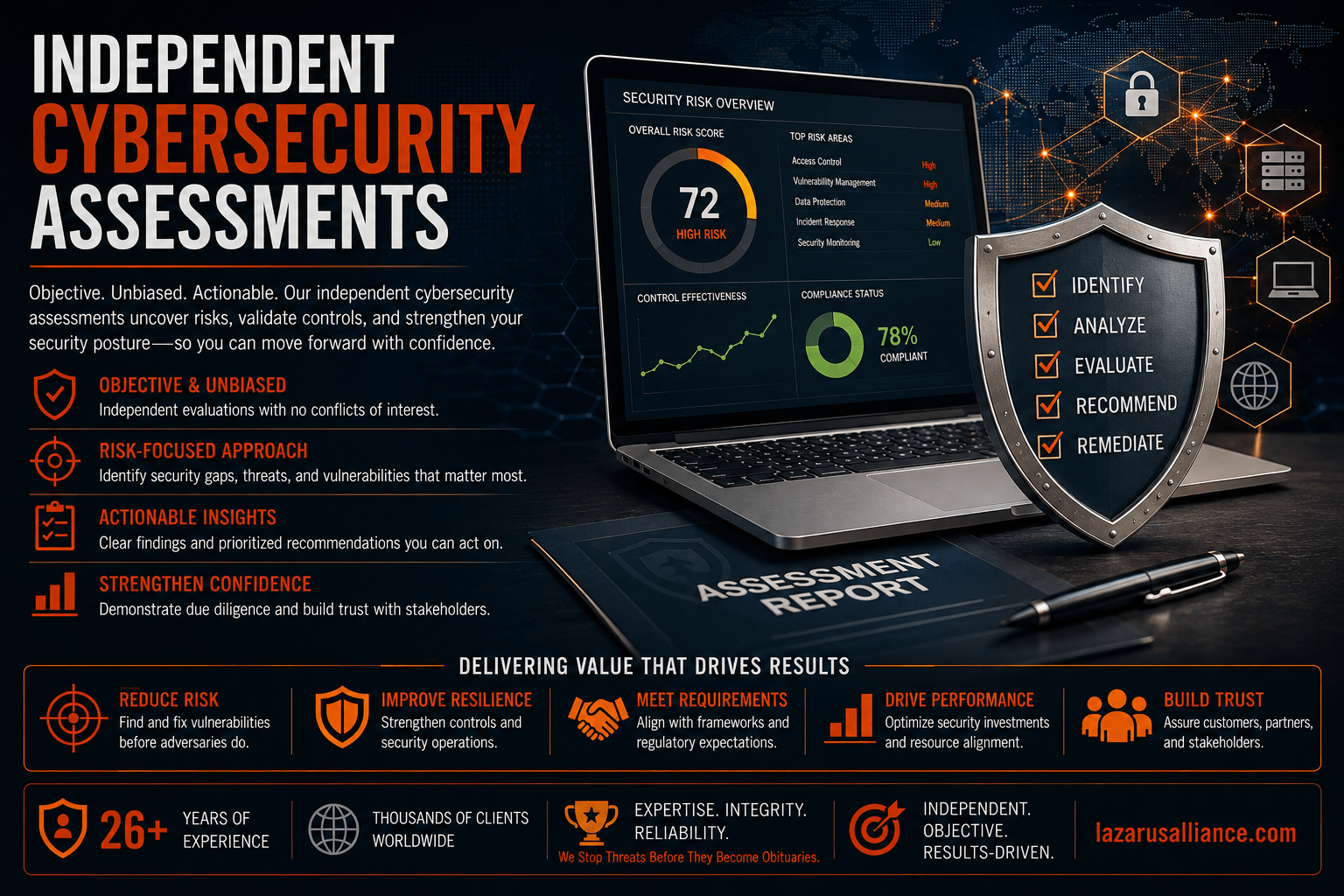
Lazarus Alliance provides independent cybersecurity assessments, audits, examinations, and certification services that help organizations demonstrate security and compliance. Our accredited and authorized professionals assess organizations against leading frameworks and standards, including CMMC, FedRAMP, SOC 1/2/3, PCI DSS, ISO, NIST, and other regulatory and industry requirements.

Original Cybersecurity Research

Original Cybersecurity Research

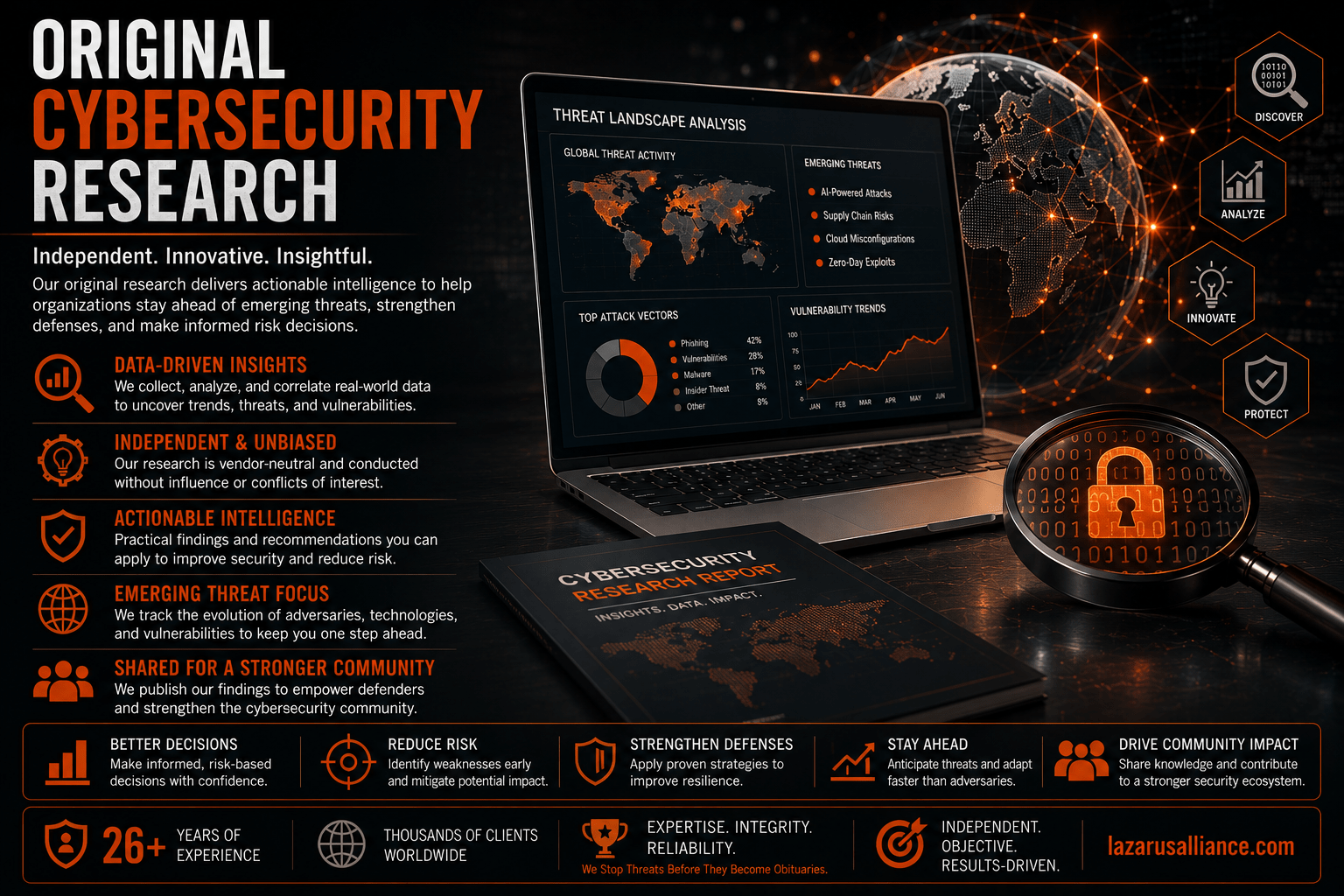
Lazarus Alliance Research publishes original, aggregate, and anonymized cybersecurity assessment and audit data derived from completed client engagements. Our benchmark research provides empirical insights into assessment duration, evidence requirements, common findings and exceptions, scope complexity, and other factors that influence cybersecurity compliance outcomes across CMMC, FedRAMP, SOC 2, and additional frameworks.

Government & Defense Cybersecurity

Government & Defense Cybersecurity

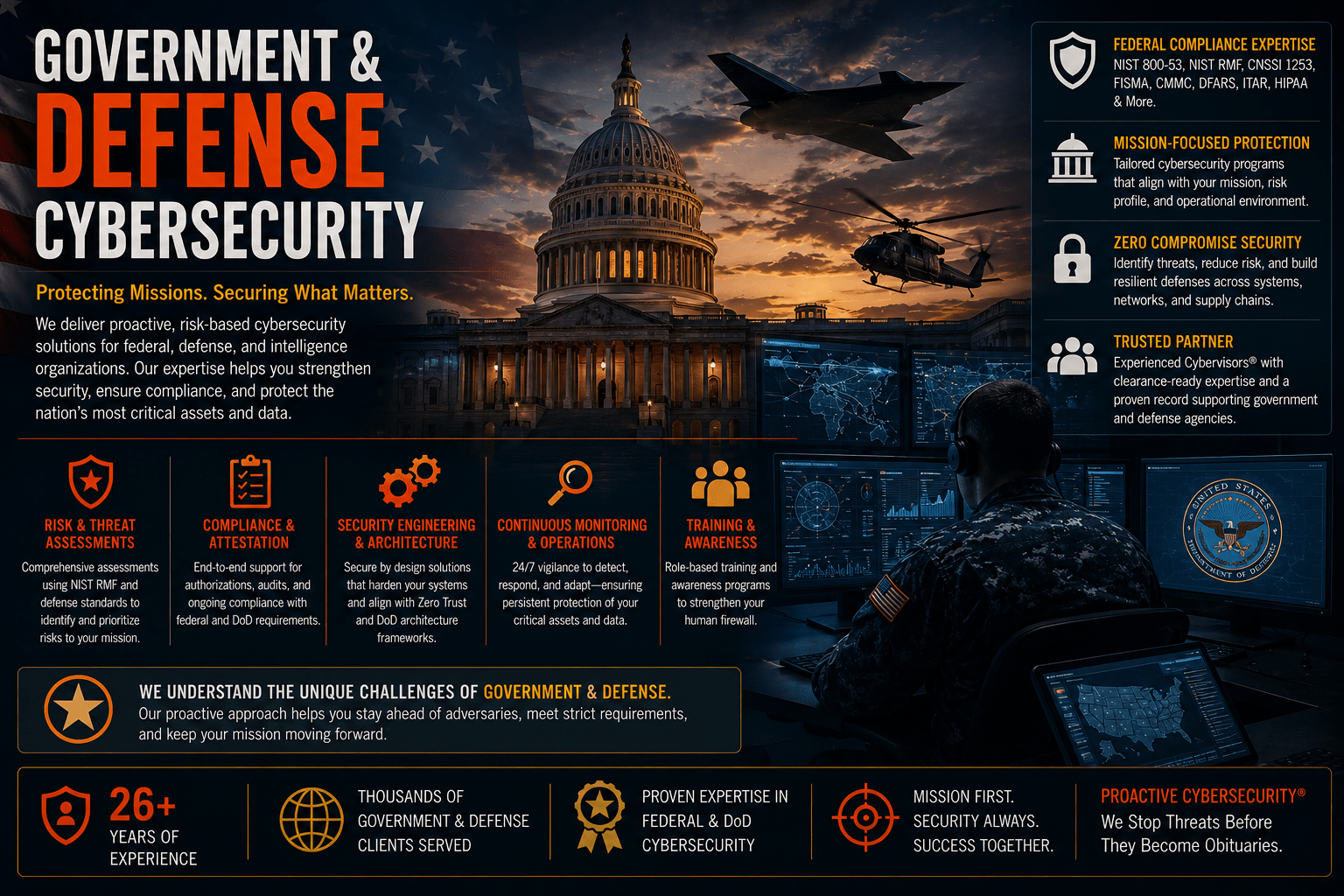
Lazarus Alliance helps federal agencies, defense contractors, cloud service providers, and organizations in the Defense Industrial Base navigate complex cybersecurity assessment and compliance requirements. Our expertise spans CMMC, FedRAMP, NIST SP 800-171, NIST SP 800-53, DFARS, FISMA, and other federal security requirements, combining independent assessment expertise with practical knowledge gained from real-world cybersecurity engagements.

Lazarus Alliance Research

Original cybersecurity audit, assessment, and compliance intelligence derived from aggregate, anonymized engagement data.

DatasetResearch DatasetBenchmark Report
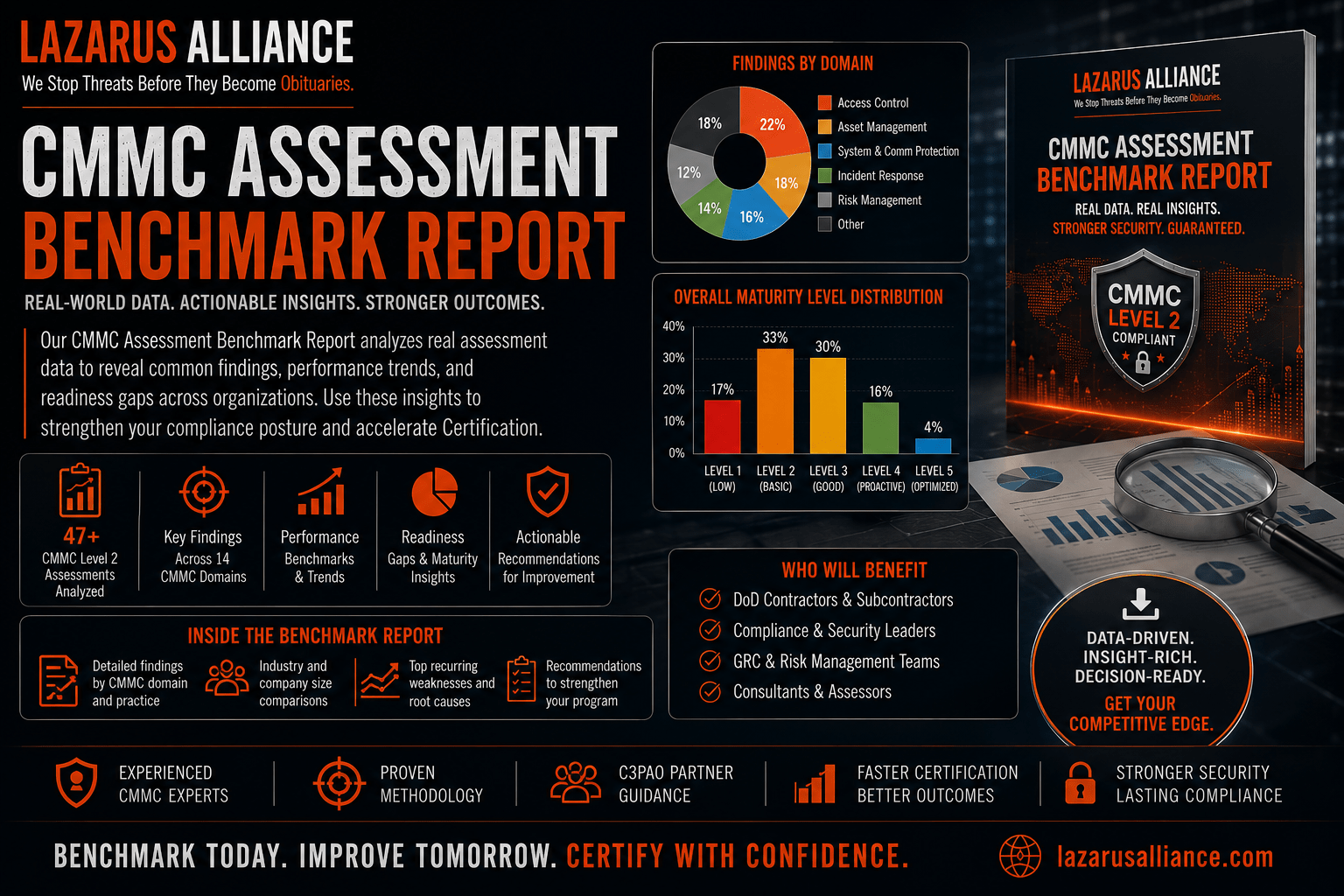
47Completed Formal CMMC Level 2 Assessments Analyzed
2026 CMMC Assessment Benchmark Report
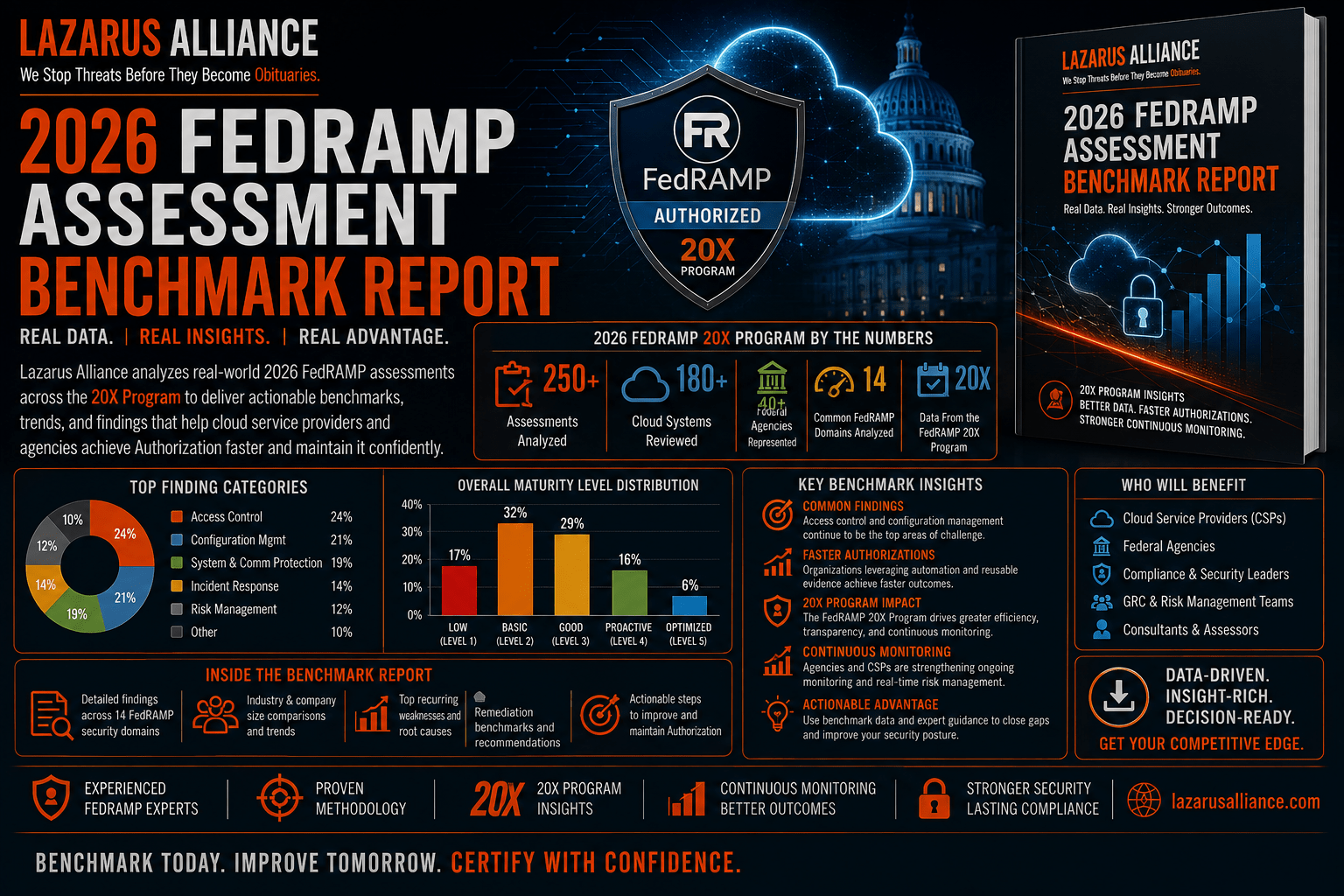
38Completed FedRAMP Assessments Analyzed
2026 FedRAMP Assessment Benchmark Report
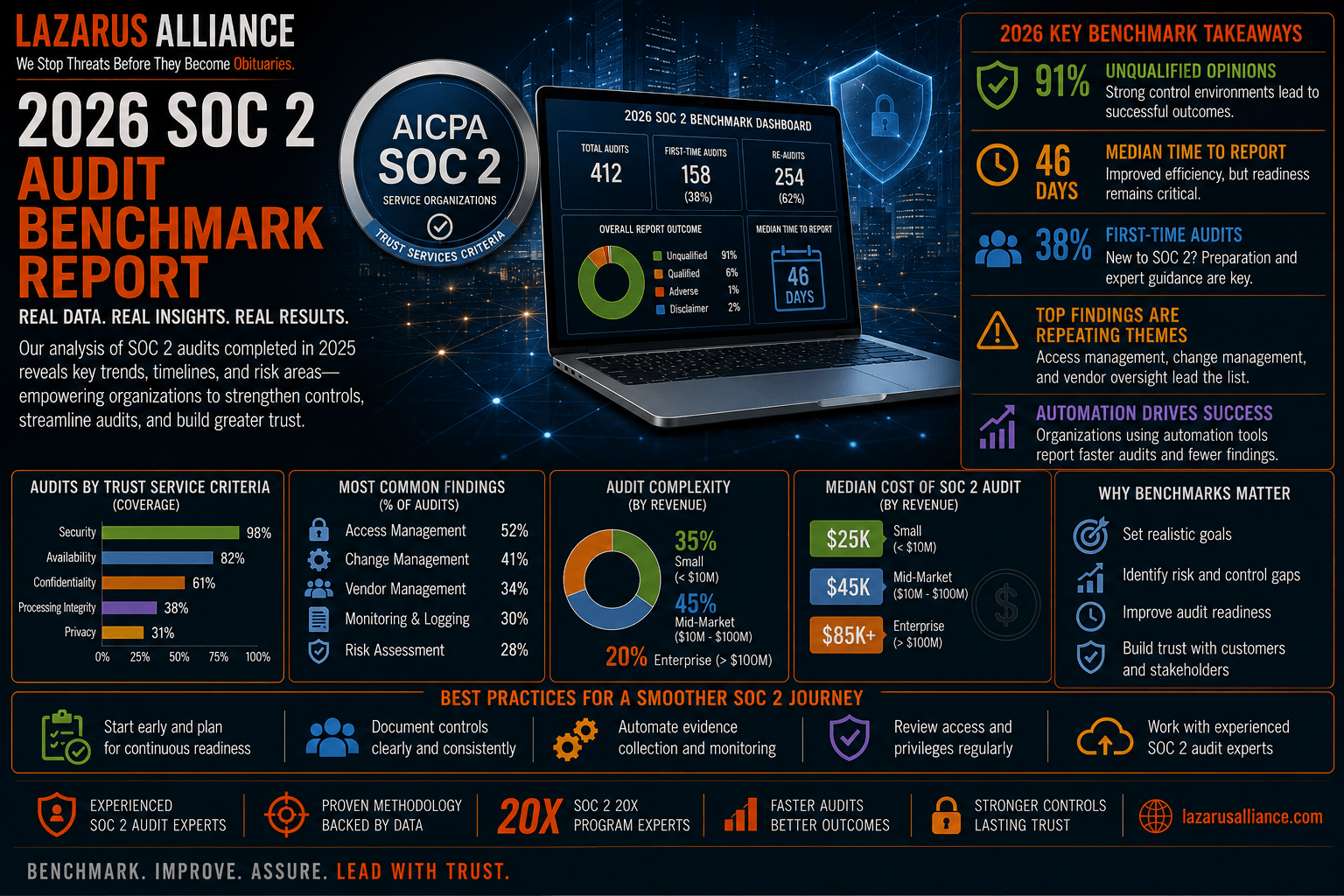
75Completed SOC 2 Assessments Analyzed
2026 SOC 2 Assessment Benchmark Report
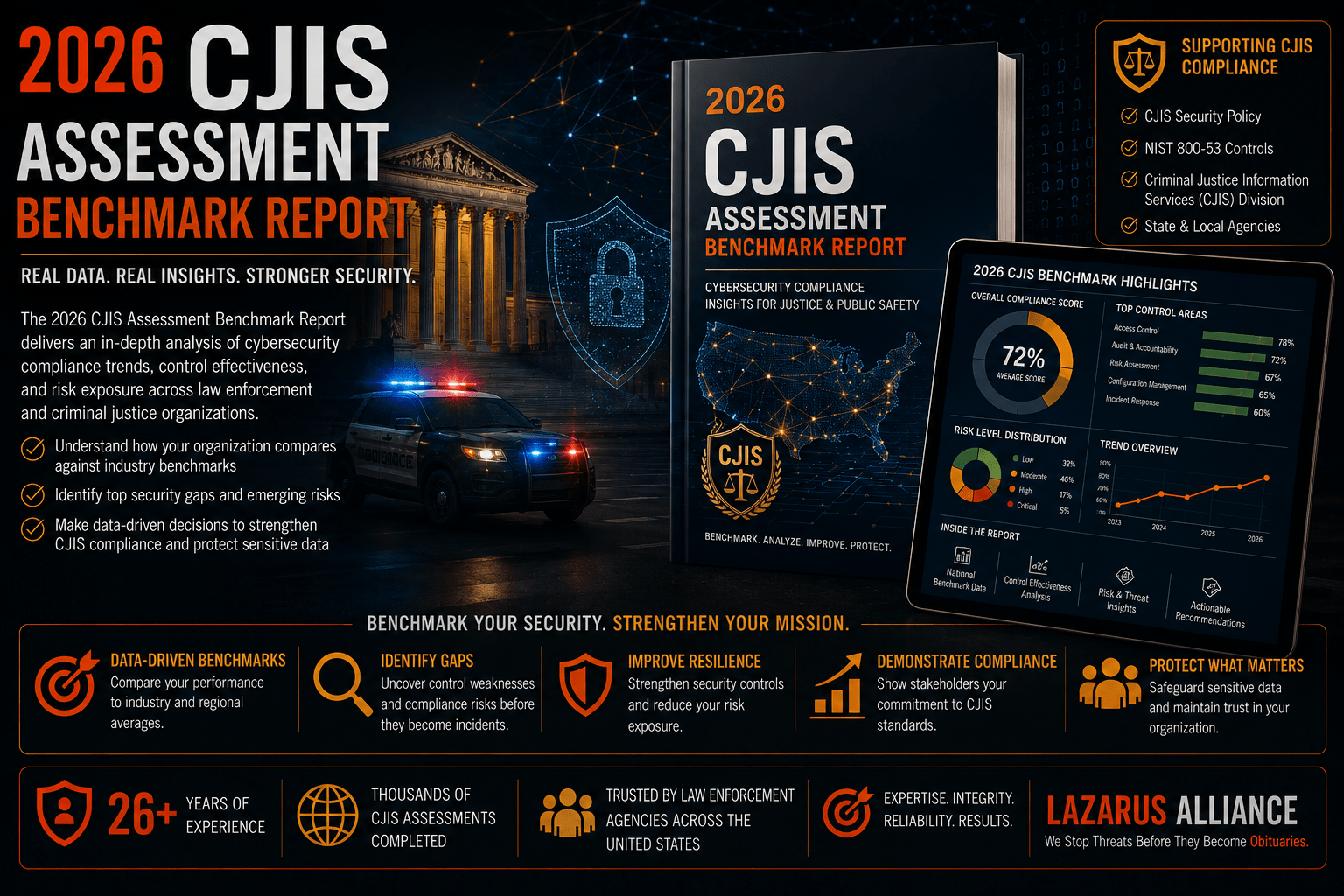
28Completed CJIS Assessments Analyzed
2026 CJIS Assessment Benchmark Report
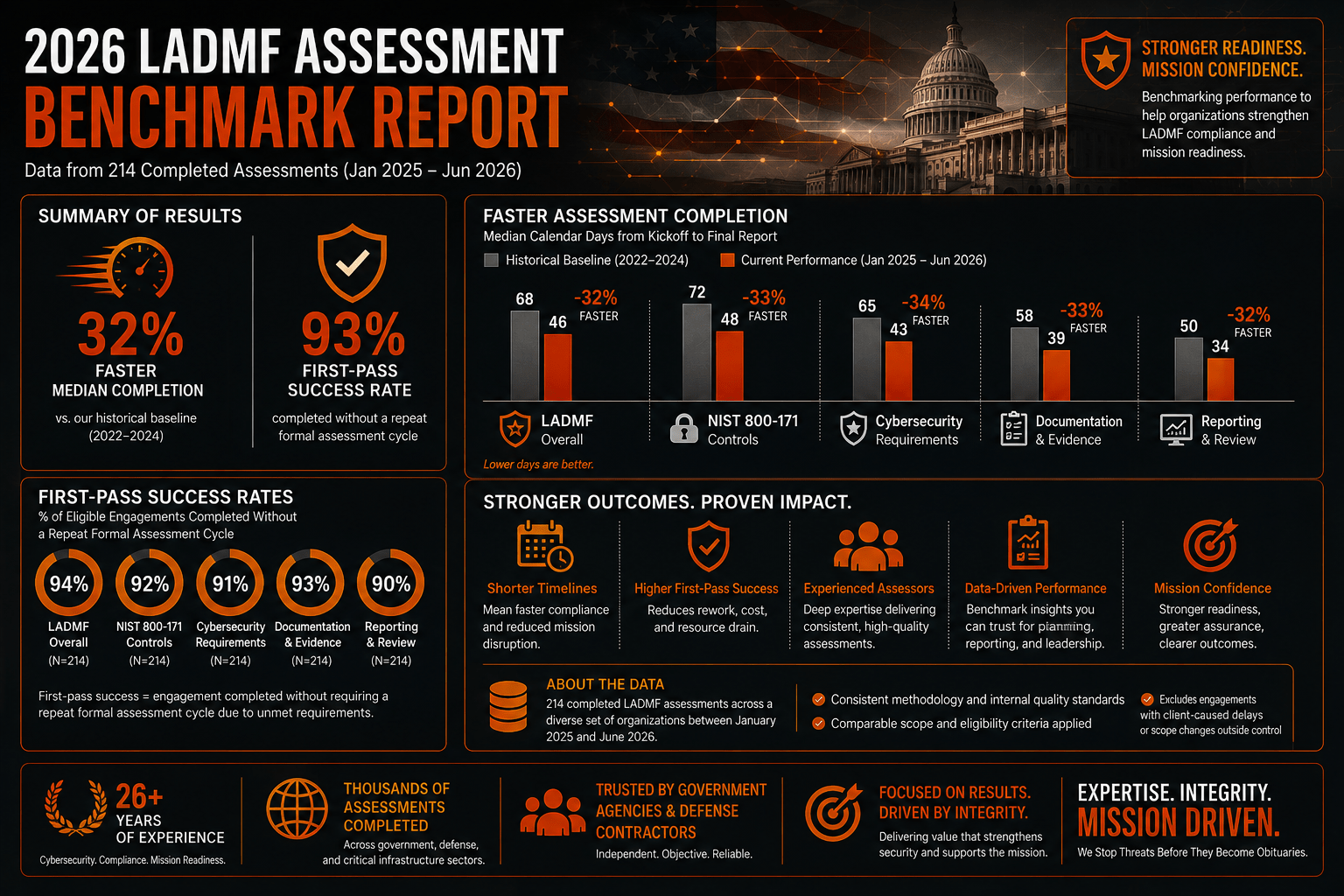
18Completed LADMF Assessments Analyzed
2026 LADMF Assessment Benchmark Report

Explore Lazarus Alliance Research →

Frequently Asked Questions

Lazarus Alliance is a veteran-owned global provider of Proactive Cybersecurity® services. For over 26 years, we have delivered audit, compliance, risk management, privacy, penetration testing, and governance solutions to organizations of all sizes across every industry and jurisdiction.

Proactive Cybersecurity® is our core philosophy of stopping threats before they become problems. We focus on continuous monitoring, real-time risk management, and building sustainable programs instead of reactive “check-the-box” audits.

Lazarus Alliance provides CMMC C3PAO assessments, FedRAMP 3PAO assessments, SOC 2 examinations, PCI DSS QSA audits, risk assessments, privacy impact assessments, vulnerability and penetration testing, policy and governance development, and Cybervisor® advisory services.

Call +1-888-896-7580 or complete the form on this page for a free, no-obligation consultation with one of our expert Cybervisors®.

Lazarus Alliance combines experienced assessment teams with structured evidence workflows and automation designed to improve assessment efficiency and evidence quality. Framework-specific benchmark results are published through Lazarus Alliance Research.

A Cybervisor® is our senior-level, AI-enhanced cybersecurity advisor who works as an extension of your team. They provide strategic guidance, hands-on implementation, and continuous support to accelerate compliance and strengthen your overall security posture.

Yes. We partner with organizations of all sizes, from startups to global enterprises like Cisco and Vanguard, across every major industry. Our efficient methodology makes compliance achievable without unnecessary complexity or cost.

Absolutely. We support clients worldwide with deep expertise in both U.S. and international regulations, including CCPA, PIPEDA, DPDP, and other global privacy and cybersecurity requirements.

Phone consultations: Monday–Friday, 8:00 AM–5:00 PM MST. Form and email inquiries receive a next-business-day response.

Expert Publications

Expert Publications deliver timely cybersecurity insights, regulatory analysis, and practical guidance from Lazarus Alliance experts on emerging threats, compliance requirements, industry developments, and evolving security standards.

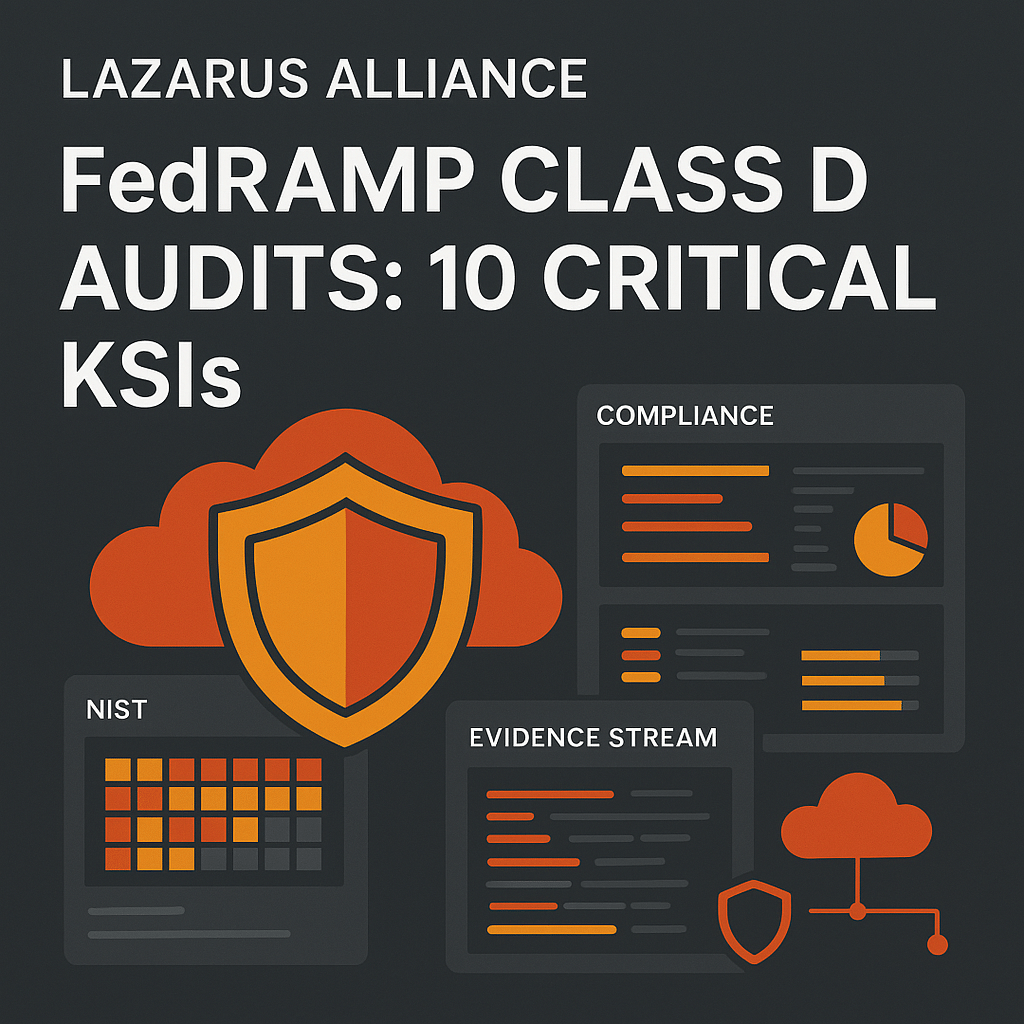
Lazarus Alliance FedRAMP Class D Audits: 10 Critical KSIs

FedRAMP Class D is not simply “FedRAMP High with a faster checklist.” The strategic shift is that high-assurance cloud authorization is moving toward machine-readable evidence, repeatable validation, and continuous risk signals that can withstand scrutiny from federal agencies, mission owners, and assessors. For cloud service providers supporting sensitive federal workloads, the critical question is no longer whether a control is documented; it is whether the evidence proves the control is implemented, operating, monitored, and resilient under adversarial conditions.

FedRAMP has reported that FedRAMP 20x is moving from concept into an operating model, including 26 FedRAMP 20x certifications among 92 new FedRAMP certifications in FY26, and FedRAMP has stated that it will stop processing legacy Rev5 certification applications on June 11, 2027, according to FedRAMP, From Foundation to Implementation. The Class D discussion raises the stakes further: FedRAMP published RFC-0036 for FedRAMP 20x Class D cloud-hosted pilot requirements on October 15, 2026, with public comments open until November 19, 2026, and the RFC proposes 10 new Key Security Indicators for the highest-assurance FedRAMP 20x class, according to the FedRAMP Community RFC-0036 discussion.

For Lazarus Alliance clients, the takeaway is direct: FedRAMP Class D readiness should be treated as a high-assurance cloud risk management program, not a paperwork sprint. The ten Key Security Indicator areas below provide an audit-oriented operating model for preparing sensitive workloads for Class D expectations while preserving alignment with NIST 800-53 High, FedRAMP, GovRAMP, CJIS, CMMC, DFARS NIST 800-171, SOC 2, PCI DSS, HIPAA, IRS 1075, ISO 27001, C5, and the Lazarus Alliance Data Management Framework.
Read More

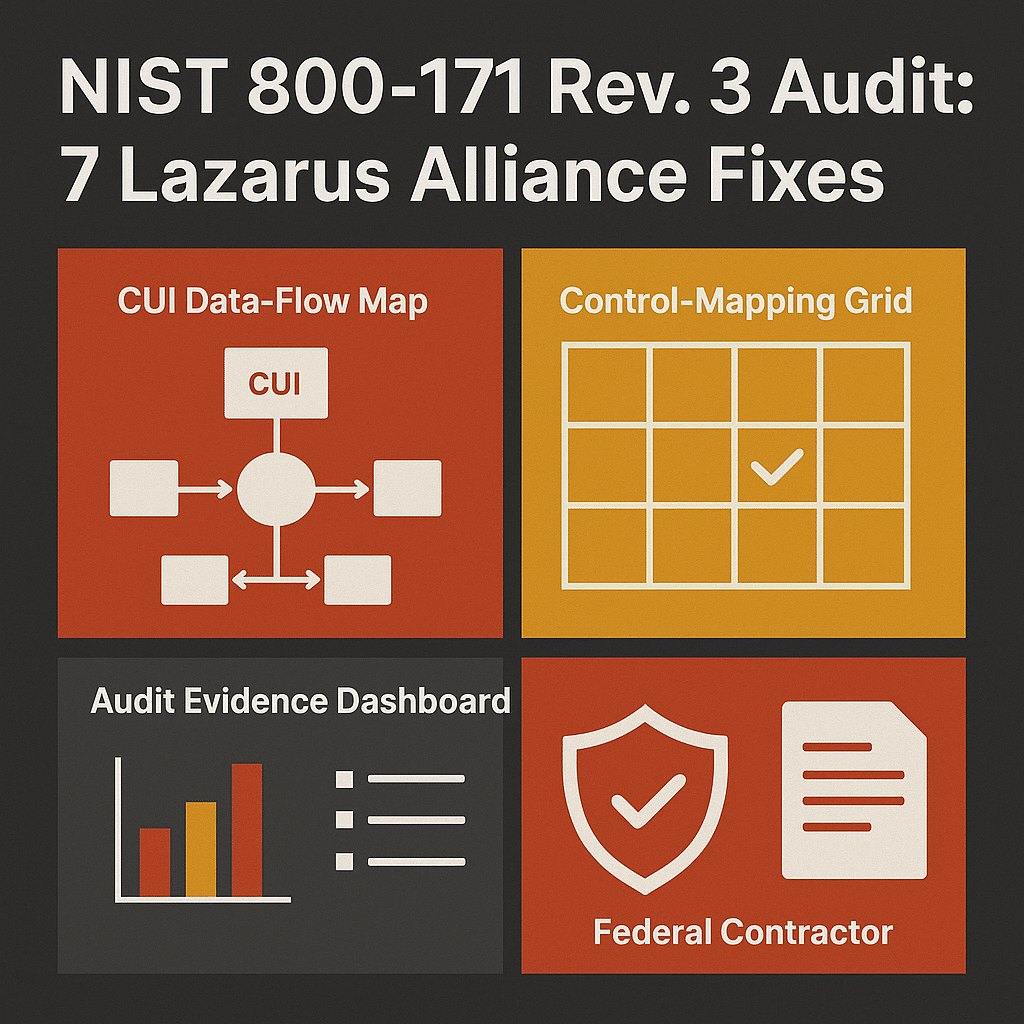
NIST 800-171 Rev. 3 Audit: 7 Lazarus Alliance Fixes

Contrarian audit lesson: the hardest part of a NIST 800-171 Rev. 3 audit is not reading the new requirements. It is proving, with repeatable evidence, that Controlled Unclassified Information is protected across contracts, cloud services, endpoints, administrators, subcontractors, and inherited controls. NIST describes SP 800-171 Rev. 3 as security requirements for protecting CUI in nonfederal systems and organizations, and the publication is explicitly tied to the federal CUI program and the protection of CUI outside federal systems NIST, SP 800-171 Rev. 3.

For federal contractors, the practical challenge in 2026 is version-aware audit readiness. Many contract clauses, customer questionnaires, and CMMC preparation activities still require defensible NIST 800-171 evidence, while Rev. 3 changes how organizations should think about control mapping, parameters, scoping, and assessment artifacts. Lazarus Alliance approaches this as an evidence-engineering problem: define where CUI lives, map obligations once, test controls like an assessor, and make every assertion traceable to a system, owner, ticket, log, configuration, or approved policy.

Read More

CJIS v6.1 Audits by Lazarus Alliance: 4 Encryption Gaps

Contrarian audit insight: most CJIS compliance failures are not caused by an agency having no encryption. They occur because encryption is implemented unevenly, documented loosely, or excluded from monthly vulnerability scanning evidence. CJIS v6.1 raises the practical bar for criminal justice agencies, cloud service providers, SaaS platforms, managed service providers, and contractors that create, receive, store, process, or transmit Criminal Justice Information. The audit question is no longer simply whether encryption exists. The stronger question is whether encryption is complete, cryptographically defensible, continuously monitored, and provable.

For CISOs and compliance officers, CJIS v6.1 should be treated as a control-evidence modernization project. Encryption architecture, vulnerability scanning, patch governance, key management, cloud configuration, remote access, backups, and third-party connectivity all need to produce repeatable evidence. Lazarus Alliance approaches CJIS compliance assessments with that evidence-first mindset, aligning CJIS requirements to broader security control families such as NIST 800-53 security assessment, risk assessment, system and communications protection, access control, audit logging, and configuration management.

Read More

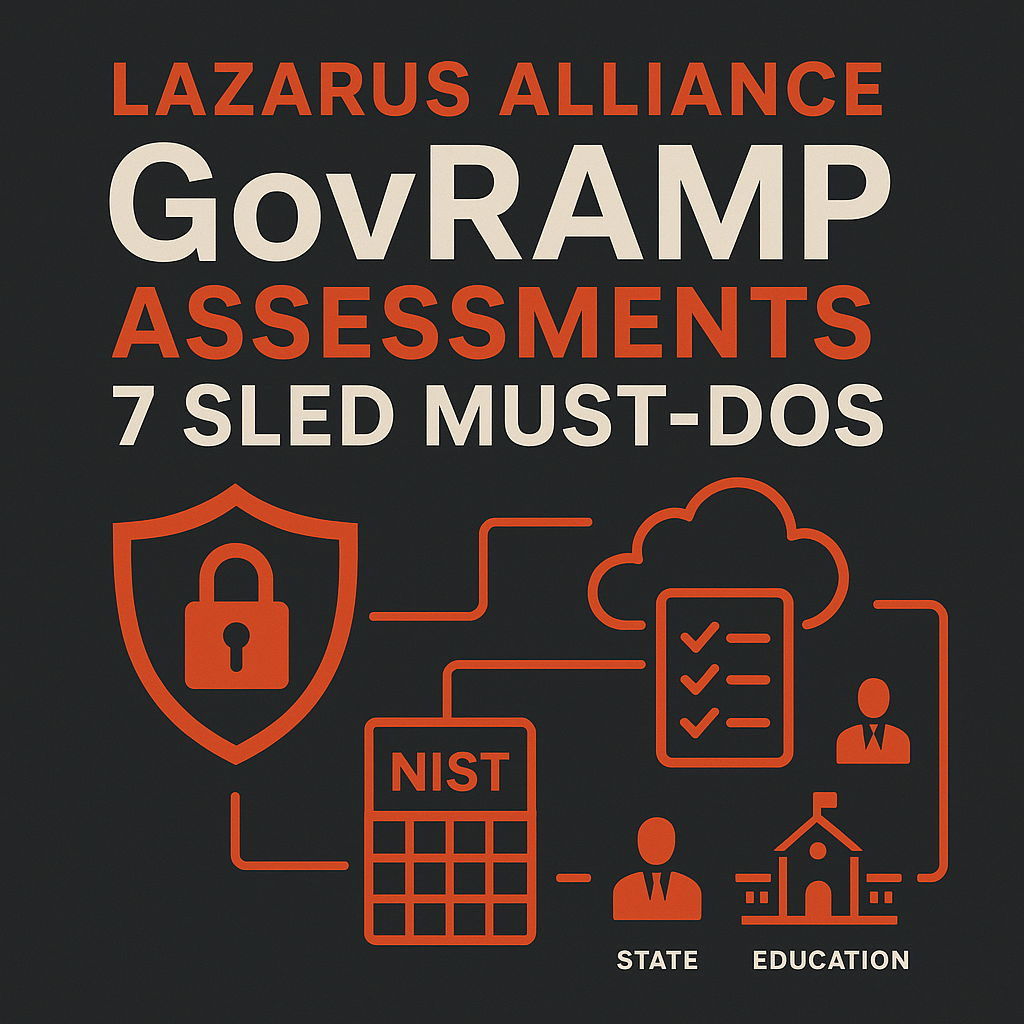
Lazarus Alliance GovRAMP Assessments: 7 SLED Must-Dos

Contrarian view: GovRAMP is not just another badge for cloud vendors. For SLED buyers, it is becoming procurement infrastructure: a way to replace one-off questionnaires with reusable, NIST 800-53-based security assurance that can survive contract review, cyber insurance scrutiny, incident response, and public accountability. The organizations that win in this environment will not treat GovRAMP or StateRAMP as a paperwork exercise; they will engineer auditable cloud operations from architecture through continuous monitoring.

Read More

Awards and Accolades

Do you have any questions?

Lazarus Alliance is the premier global provider of Proactive Cybersecurity®, delivering direct access to top-tier experts in cyberspace law, IT security and operations, risk and governance, compliance, policy development, and related fields.