Why HIPAA risk analysis fails when it becomes a paperwork exercise
The strongest HIPAA Security Rule programs do not begin with a template. They begin with a defensible understanding of where electronic protected health information, or ePHI, is created, received, maintained, transmitted, accessed, logged, backed up, and shared. The HIPAA Security Rule establishes national standards for protecting ePHI, and covered entities and business associates must implement administrative, physical, and technical safeguards appropriate to their environments, according to HHS, Summary of the HIPAA Security Rule.
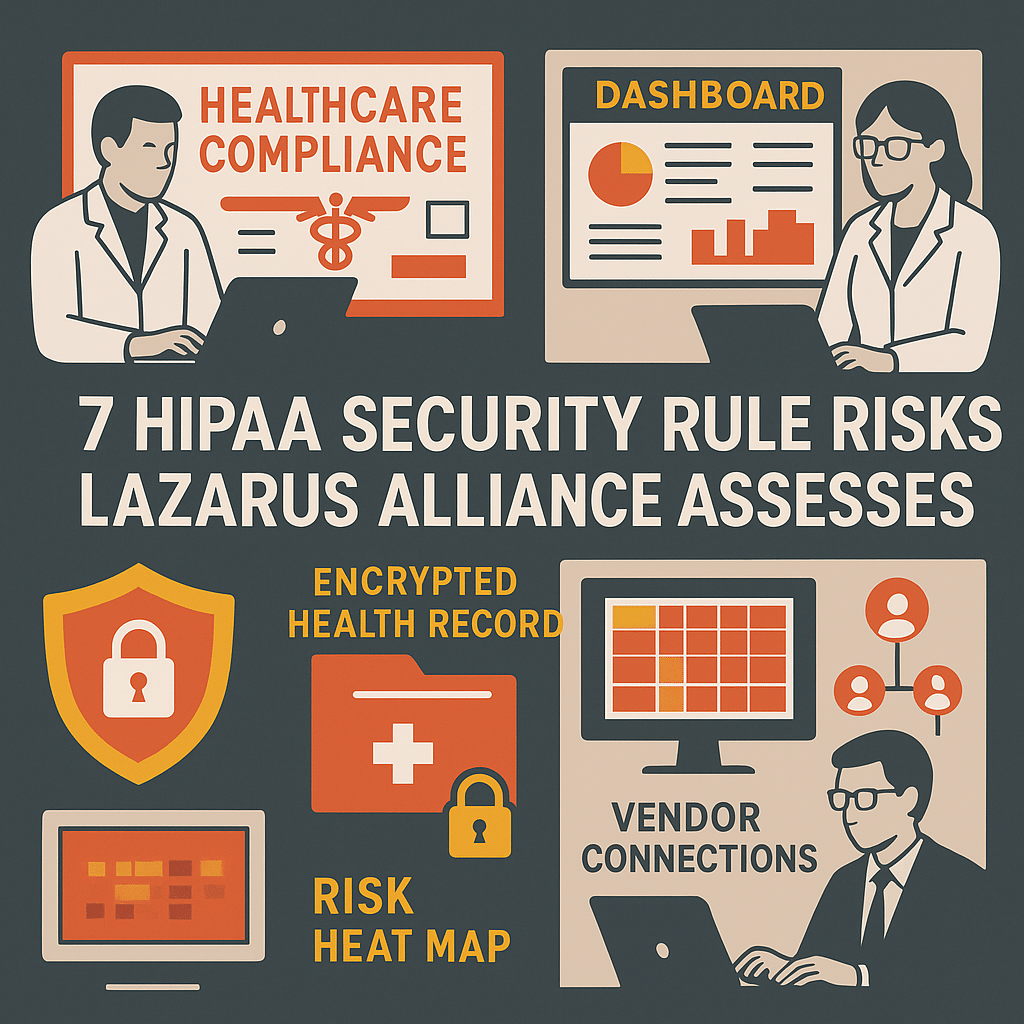
The contrarian truth is that many healthcare organizations do not fail HIPAA because they lack security tools. They fail because risk analysis, evidence collection, vendor oversight, configuration management, and executive governance operate in separate lanes. Lazarus Alliance assesses HIPAA Security Rule risk as an integrated compliance and cybersecurity problem: the same identity, encryption, monitoring, vulnerability, incident response, and third-party controls that support HIPAA also support NIST 800-53, SOC 2, PCI DSS, FedRAMP, GovRAMP, CJIS, CMMC, ISO 27001, IRS 1075, C5, and LADMF readiness when properly mapped and evidenced.