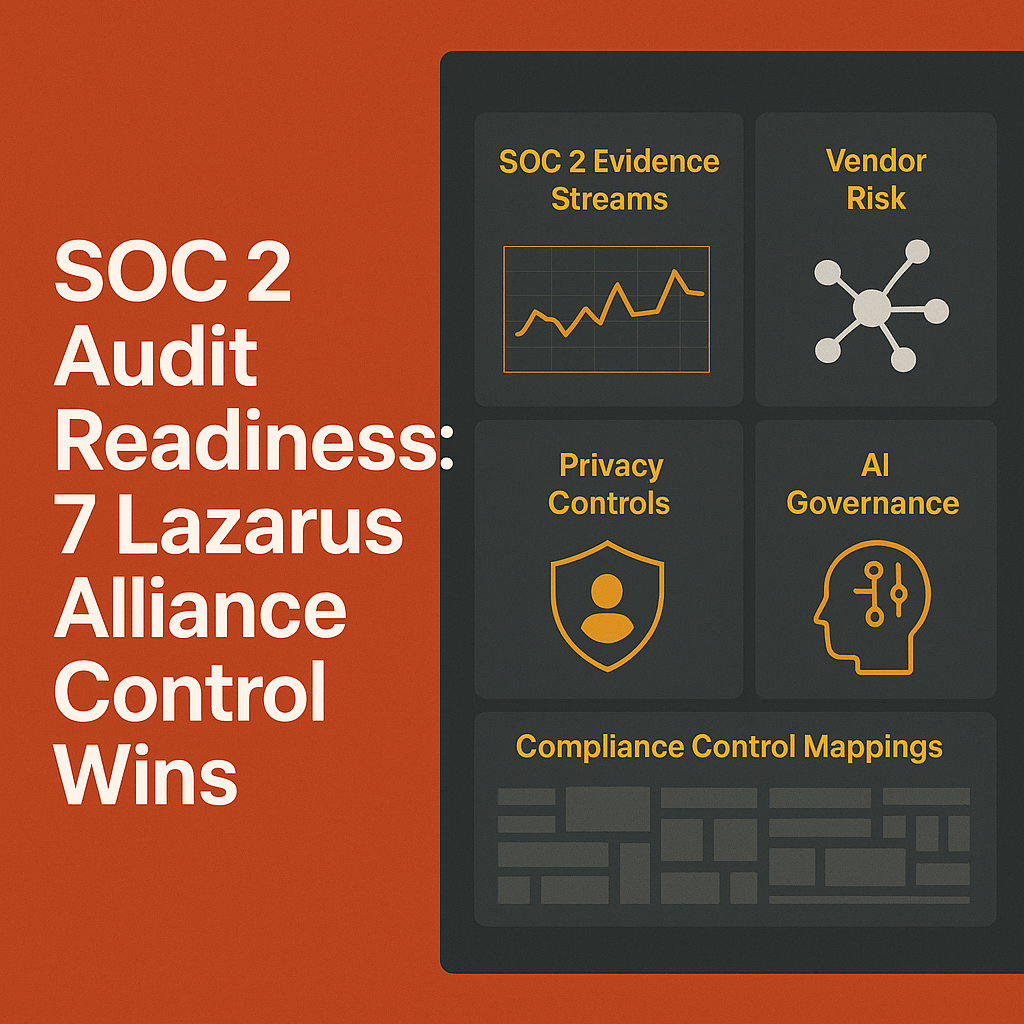
SOC 2 Audit Readiness: 7 Lazarus Alliance Control Wins

SOC 2 Audit Readiness: 7 Lazarus Alliance Control Wins

The fastest path to SOC 2 audit readiness is not to collect more screenshots. It is to design a control environment that produces trustworthy evidence as a byproduct of normal operations. That is the practical difference between organizations that survive a SOC 2 examination and organizations that use SOC 2 to win enterprise deals, reduce questionnaire fatigue, and strengthen security governance.

SOC 2 examinations are grounded in the AICPA Trust Services Criteria for security, availability, processing integrity, confidentiality, and privacy; the AICPA also provides description criteria used to prepare and evaluate the service organization system description in SOC 2 reporting AICPA & CIMA, SOC 2 Description Criteria. In 2026, customers are asking harder questions: Can you prove access reviews happened on time? Can you show privacy commitments are mapped to controls? Can you demonstrate vendor risk monitoring? Can you explain how AI is governed inside your service delivery environment?

For Lazarus Alliance, SOC 2 audit readiness is a control-engineering exercise, not a binder-building exercise. The seven control wins below translate the Trust Services Criteria into repeatable operations, continuous evidence, and cross-framework assurance for SaaS, cloud, healthcare technology, fintech, defense industrial base, and public-sector suppliers.
Read More

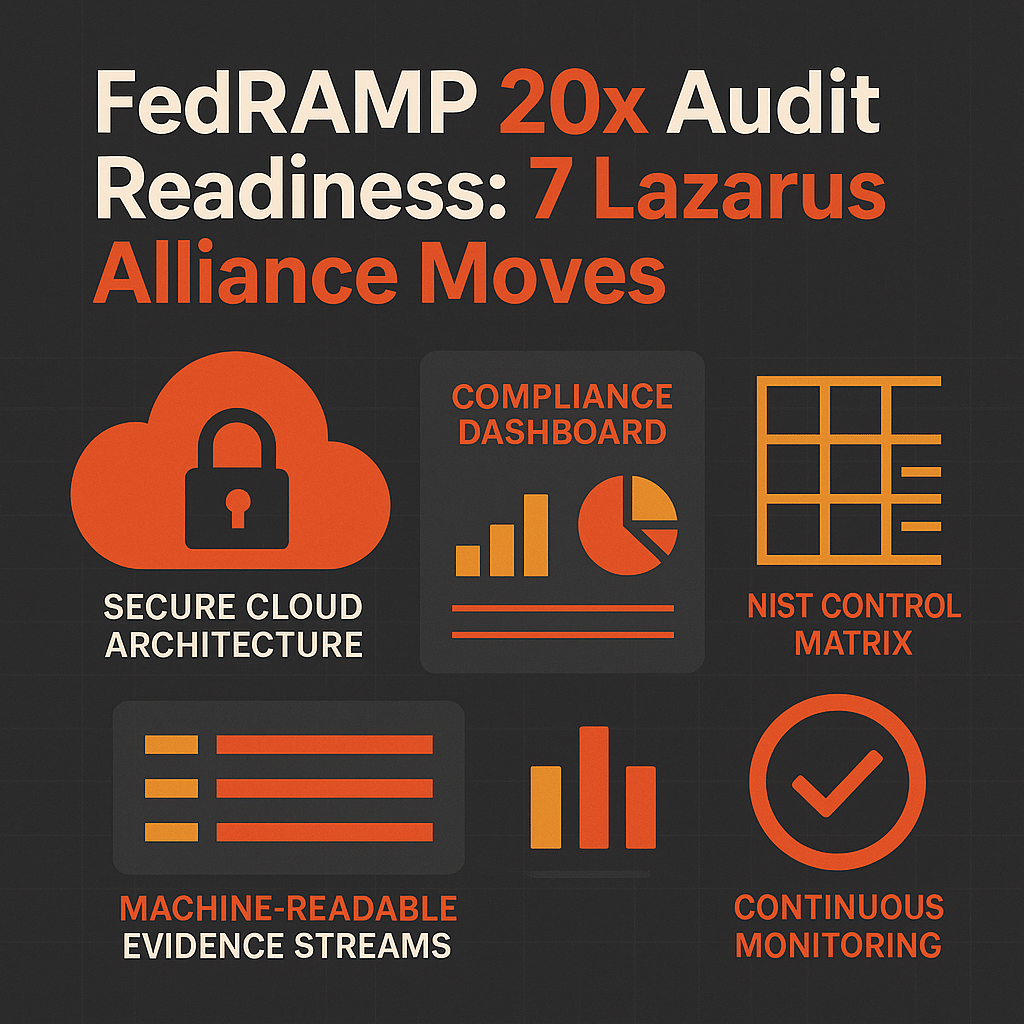
FedRAMP 20x Audit Readiness: 7 Lazarus Alliance Moves

FedRAMP 20x Audit Readiness: 7 Lazarus Alliance Moves

FedRAMP 20x is not just a faster authorization lane; it is a different assurance operating model. The organizations most likely to succeed will not be the ones with the longest policy binders. They will be the cloud service providers that can prove, continuously and repeatably, that controls are implemented, monitored, tested, remediated, and traceable to NIST 800-53 expectations.

For CISOs, compliance leaders, cloud architects, and product executives, the practical question is no longer whether the system has documentation. The question is whether the system can produce trustworthy, machine-readable, assessor-ready evidence on demand.

Read More

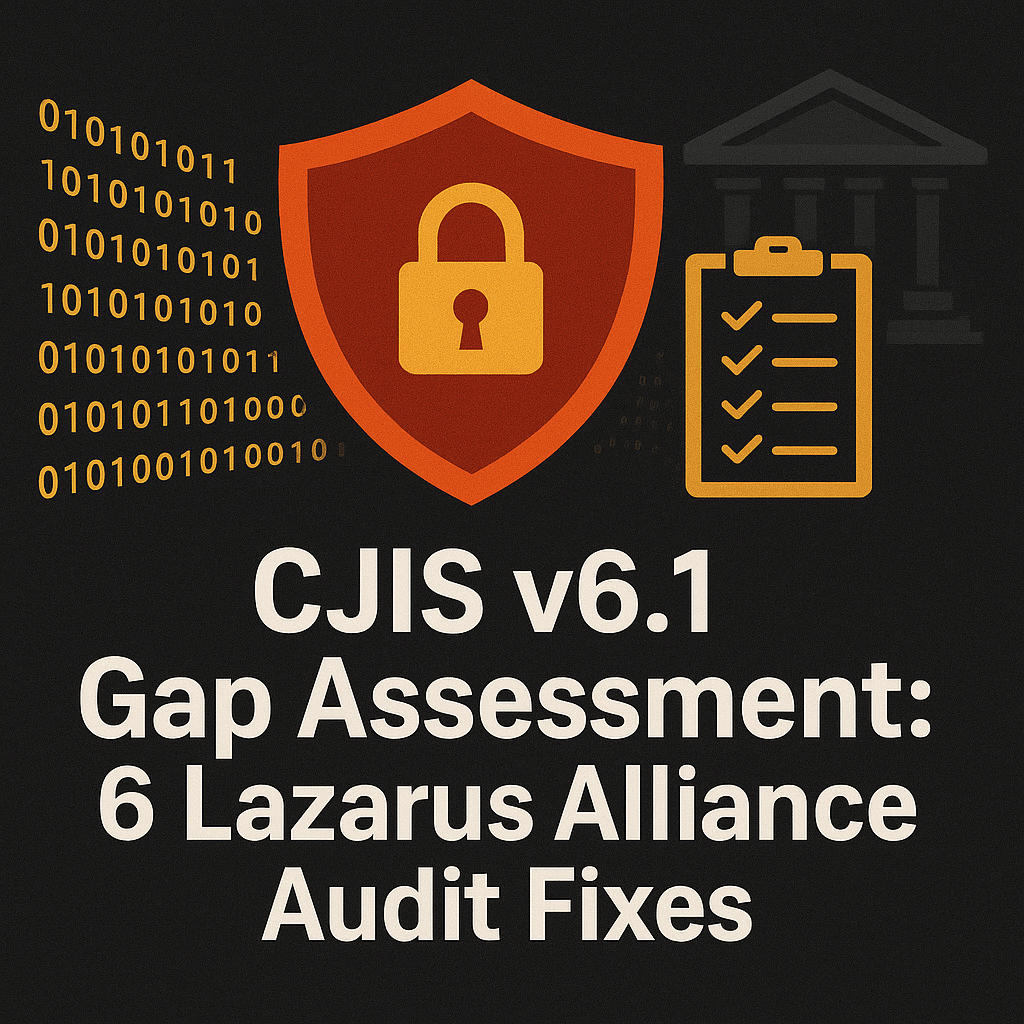
CJIS v6.1 Gap Assessment: 6 Lazarus Alliance Audit Fixes

CJIS v6.1 Gap Assessment: 6 Lazarus Alliance Audit Fixes

CJIS v6.1 gap assessment work is not a paperwork exercise; it is a control-engineering exercise. The agencies and vendors that will pass scrutiny are the ones that can prove, with defensible evidence, that Criminal Justice Information is identified, isolated, encrypted, monitored, governed, and continuously tested across the full technology supply chain.

The practical shift is that CJIS compliance now looks much more like a structured NIST 800-53 assessment than a legacy checklist. According to reporting on the current policy release, FBI CJIS Security Policy v6.1 was published on June 25, 2026, and the modernization moves CJIS toward a control-based structure closely aligned with NIST SP 800-53; the same report notes updates including stronger symmetric encryption expectations and more frequent vulnerability scanning BleepingComputer, FBI’s CJIS v6.1: What Security Teams Need to Know. The FBI also maintains the official CJIS Security Policy Resource Center for policy resources and related materials FBI, CJIS Security Policy Resource Center.

For CISOs, compliance officers, IT directors, law-enforcement technology suppliers, and cloud service providers, the winning strategy is a focused CJIS v6.1 gap assessment mapped to NIST 800-53, with evidence that can be reused for SOC 2, FedRAMP, CMMC, DFARS NIST 800-171, PCI DSS, HIPAA, IRS 1075, C5, GovRAMP, ISO 27001, and LA DMF programs. Lazarus Alliance supports CJIS-focused readiness through its criminal justice information services audit and compliance practice Lazarus Alliance, CJIS Services and NIST 800-53/FISMA assessment services Lazarus Alliance, FISMA and NIST Audit Services.

Read More