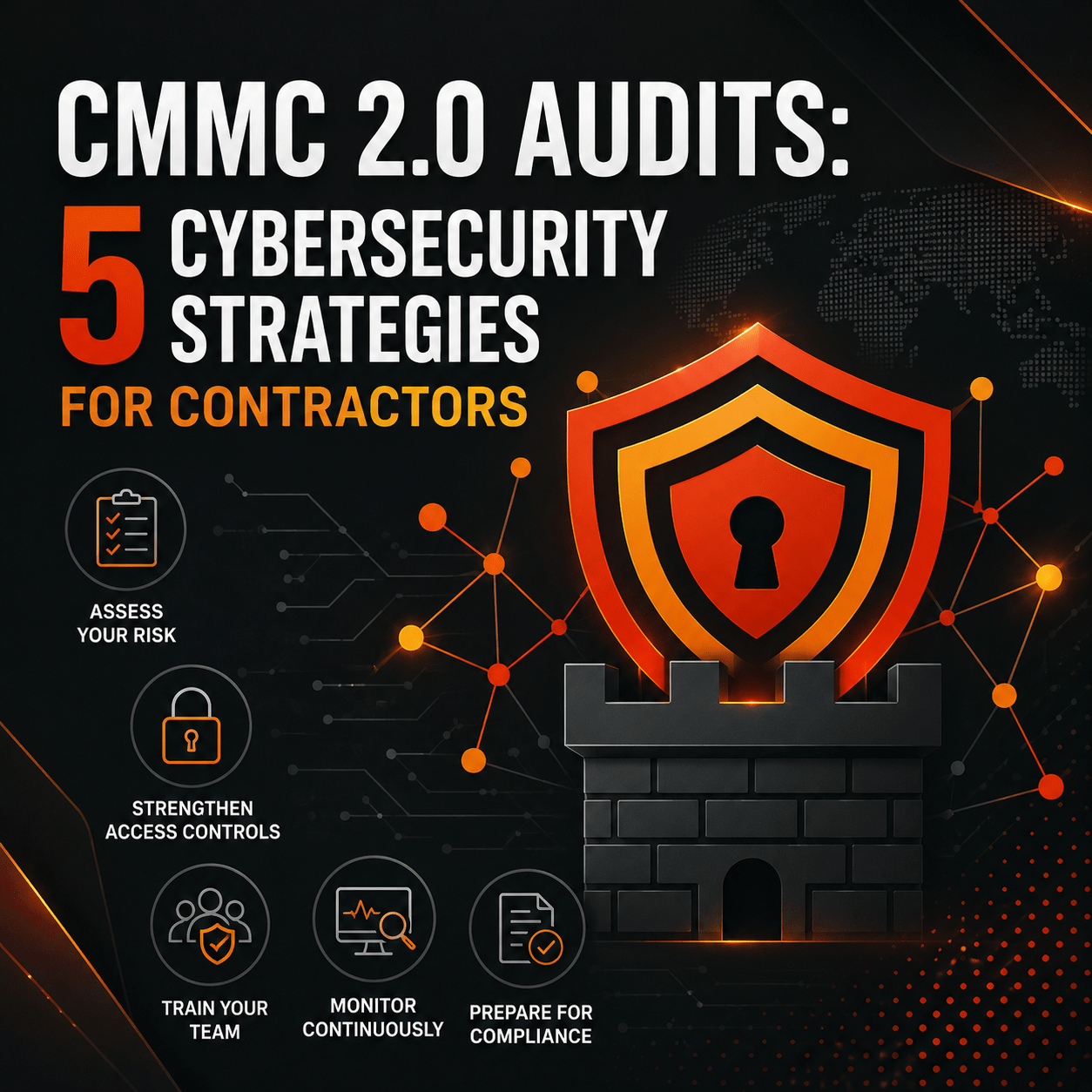
As the CMMC 2.0 Final Rule continues its rollout in 2026 and beyond, defense contractors face heightened scrutiny in cybersecurity audits and compliance assessments. Decision-makers must prioritize proactive strategies to safeguard sensitive information while aligning with evolving regulatory demands. This approach not only mitigates risks but also positions organizations for sustained success in regulated industries.
Understanding the CMMC 2.0 Landscape in 2026
The CMMC 2.0 framework emphasizes streamlined cybersecurity audits that build on foundational standards. Contractors handling controlled unclassified information must demonstrate robust controls through structured compliance assessments. By focusing on risk management, organizations can navigate the final rule effectively while integrating complementary frameworks such as NIST, ISO 27001, SOC 2, HIPAA, and FedRAMP.
Key Shifts in Compliance Requirements
In 2026, CMMC 2.0 introduces greater flexibility for self-assessments at lower levels, yet Level 3 demands rigorous third-party verification. This evolution encourages contractors to adopt unified risk management practices that span multiple standards. Aligning CMMC controls with NIST guidelines ensures baseline security, while ISO 27001 certification adds an international layer of credibility.
Strategy 1: Align Controls with NIST and CMMC Overlaps
Begin by mapping existing policies to NIST SP 800-171 requirements, which form the core of CMMC. Conduct gap analyses during compliance assessments to identify deficiencies in access controls and incident response. This actionable step reduces audit preparation time and strengthens overall risk management.
- Perform quarterly reviews of NIST-aligned controls to maintain CMMC readiness.
- Document evidence of implementation for cybersecurity audits.
- Integrate automated tools for continuous monitoring.
Strategy 2: Pursue Integrated ISO 27001 and SOC 2 Certifications
Layering ISO 27001 and SOC 2 frameworks with CMMC creates a comprehensive compliance ecosystem. ISO 27001 provides a risk-based management system, while SOC 2 validates service organization controls. Decision-makers should schedule joint audits to streamline efforts and demonstrate maturity to stakeholders.
Actionable insight: Develop a unified policy repository that satisfies overlapping requirements across these standards. This practice enhances efficiency in risk management and supports seamless CMMC 2.0 assessments in 2026.
Strategy 3: Incorporate HIPAA and FedRAMP for Sector-Specific Needs
Contractors operating in healthcare or cloud environments must extend CMMC strategies to include HIPAA privacy rules and FedRAMP authorization. Mapping these to CMMC domains ensures holistic protection of sensitive data during compliance assessments.
- Conduct cross-framework risk assessments annually.
- Leverage FedRAMP baselines to accelerate CMMC Level 2 validation.
- Train teams on HIPAA breach notification integrated with CMMC incident protocols.
Best Practices for Multi-Framework Alignment
Establish a governance committee to oversee integration. Regular tabletop exercises simulate audit scenarios across all mentioned frameworks, fostering a culture of preparedness.
Strategy 4: Implement Continuous Risk Management Processes
Embed risk management into daily operations through automated scanning and threat intelligence. CMMC 2.0 audits increasingly evaluate real-time capabilities rather than static documentation. Use metrics from NIST and ISO 27001 to quantify improvements and guide resource allocation.
This strategy delivers actionable insights by prioritizing high-impact vulnerabilities, ultimately reducing exposure during cybersecurity audits.
Strategy 5: Engage Third-Party Assessors Early
Partner with certified assessors experienced in CMMC, SOC 2, and FedRAMP to conduct pre-audit evaluations. Early engagement identifies gaps before formal compliance assessments, allowing remediation aligned with 2026 timelines.
- Schedule mock audits every six months.
- Review assessor reports against ISO 27001 and HIPAA benchmarks.
- Develop remediation roadmaps tied to risk management priorities.
By adopting these five strategies, contractors can confidently navigate CMMC 2.0 audits while building resilient security postures across diverse compliance frameworks.
About Lazarus Alliance
To learn more about how Lazarus Alliance can help, contact us.
- FedRAMP
- GovRAMP
- NIST 800-53
- DFARS NIST 800-171
- CMMC
- SOC 1 & SOC 2
- C5
- HIPAA, HITECH, & Meaningful Use
- PCI DSS RoC & SAQ
- IRS 1075 & 4812
- CJIS
- LA DMF
- ISO 27001, ISO 27002, ISO 27005, ISO 27017, ISO 27018, ISO 27701, ISO 22301, ISO 17020, ISO 17021, ISO 17025, ISO 17065, ISO 9001, & ISO 90003
- And dozens more!
Related Posts