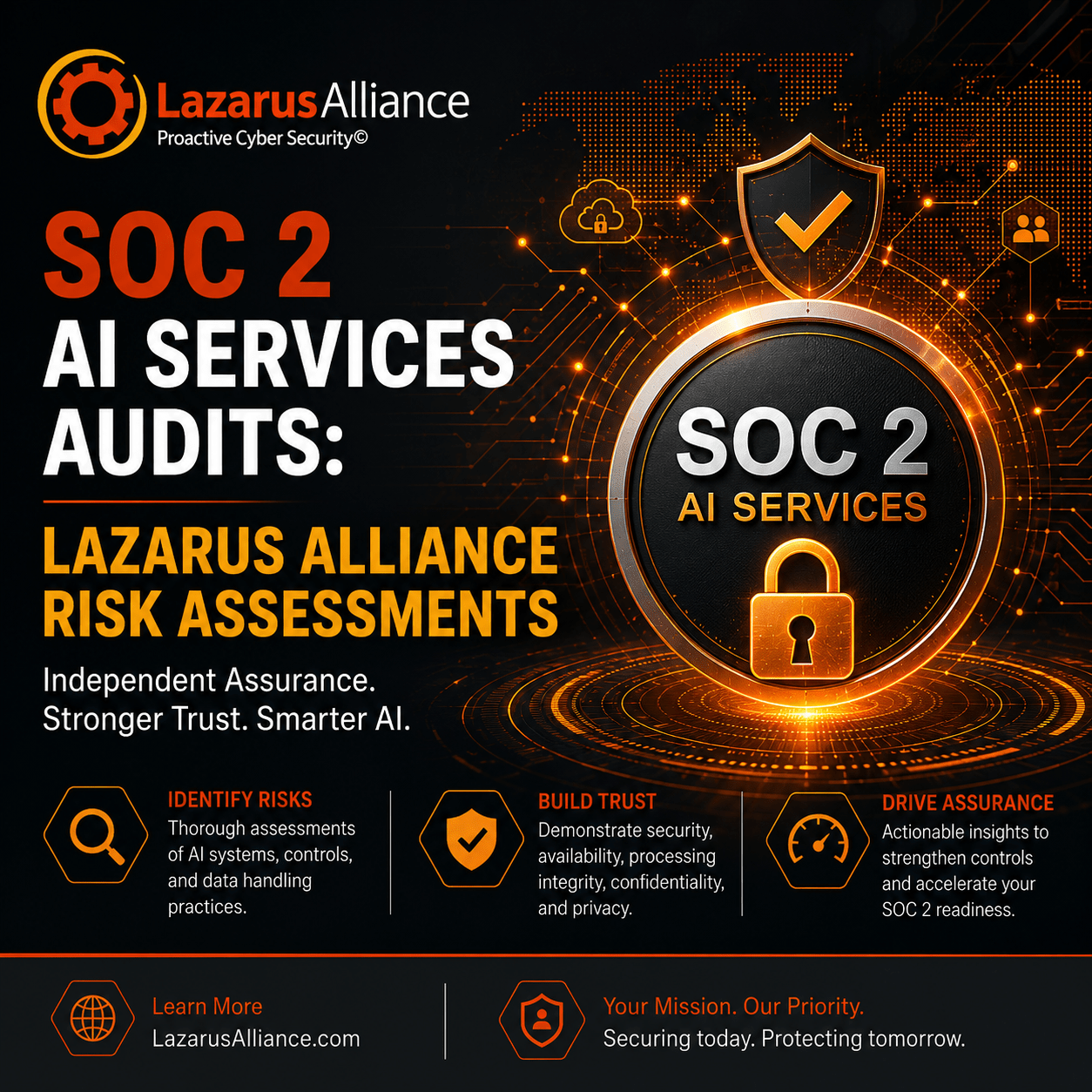
In today’s rapidly evolving digital landscape, organizations leveraging AI and machine learning face unprecedented challenges in maintaining robust security and compliance postures. SOC 2 compliance has emerged as a critical benchmark for service providers handling sensitive data, particularly those delivering AI ML solutions in cloud-native environments. Lazarus Alliance specializes in comprehensive risk management and compliance audits that help regulated industries achieve and maintain SOC 2 Type II certification while addressing the unique complexities of artificial intelligence systems.
The Growing Need for SOC 2 in AI and ML Services
Decision-makers in healthcare, finance, and government sectors increasingly rely on AI ML technologies to drive innovation and operational efficiency. However, these technologies introduce new attack surfaces and data processing risks that traditional compliance frameworks may not fully address. SOC 2 audits provide a rigorous evaluation of controls related to security, availability, processing integrity, confidentiality, and privacy—essential elements for any organization deploying cloud-native AI services.
Effective risk management begins with understanding how AI models handle training data, inference processes, and continuous learning cycles. Lazarus Alliance helps clients integrate SOC 2 requirements into their AI development lifecycles, ensuring that compliance audits evaluate both technical controls and ethical AI governance practices.
Aligning SOC 2 with Broader Compliance Frameworks
Modern enterprises rarely operate under a single regulatory standard. SOC 2 Type II assessments frequently intersect with CMMC requirements for defense contractors, NIST cybersecurity frameworks, ISO 27001 information security management systems, and HIPAA regulations for protected health information. Lazarus Alliance delivers unified GRC strategies that map overlapping controls across these frameworks, reducing audit fatigue and strengthening overall risk management.
Our auditors evaluate how AI ML systems support continuous monitoring requirements found in NIST SP 800-53 while satisfying the trust services criteria central to SOC 2. This integrated approach enables organizations to demonstrate compliance across multiple mandates through streamlined evidence collection and control testing.
Best Practices for SOC 2 Compliance Audits in AI Environments
- Implement continuous monitoring of model drift and data lineage to maintain processing integrity controls required by SOC 2.
- Establish documented change management processes for AI model updates and retraining activities.
- Conduct regular access reviews and encryption assessments for cloud-native data pipelines supporting machine learning workloads.
- Develop incident response plans specifically addressing AI-specific threats such as adversarial attacks and model poisoning.
These practices help organizations prepare for the rigorous evidence requirements of SOC 2 Type II audits, which examine operating effectiveness over a minimum six-month period.
Actionable Insights from Lazarus Alliance Risk Assessments
Our risk management methodology emphasizes proactive identification of gaps in AI governance before compliance audits begin. We recommend starting with a comprehensive gap analysis that evaluates data classification, third-party vendor management, and automated logging capabilities. Organizations that embed these controls early in their AI ML development processes typically achieve faster certification timelines and lower remediation costs.
Lazarus Alliance also advises implementing privacy-by-design principles aligned with SOC 2 privacy criteria, particularly when processing personal data through machine learning algorithms. This forward-looking approach supports both regulatory compliance and stakeholder trust in an era of increasing AI scrutiny.
Conclusion
As AI and cloud-native services become foundational to business operations, SOC 2 compliance audits represent a vital investment in sustainable growth and risk mitigation. Lazarus Alliance stands ready to guide organizations through complex compliance landscapes with expert GRC services tailored to the unique demands of AI ML technologies. Partner with us to transform regulatory requirements into competitive advantages through strategic risk management and rigorous compliance audits.
Related Posts