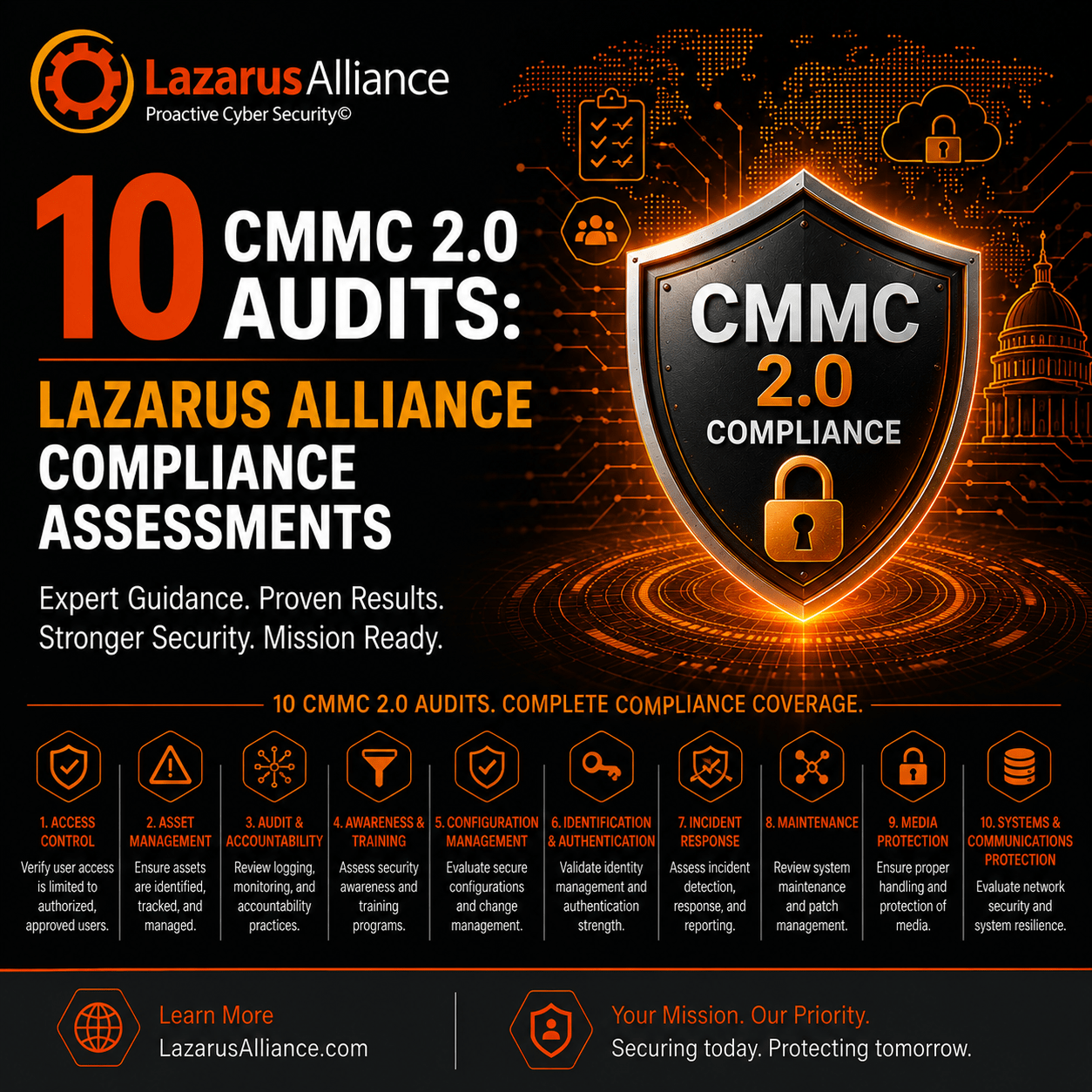
The Department of Defense’s CMMC 2.0 Final Rule has triggered a significant surge in self-assessments across the defense industrial base. Organizations are now racing to align with updated requirements while maintaining robust governance risk compliance programs. Lazarus Alliance has completed more than ten CMMC 2.0 audits in the past year, providing clear insights into the challenges and successes experienced by contractors of all sizes.
Understanding the CMMC 2.0 Final Rule Implementation
The final rule streamlines assessment levels and emphasizes self-attestation for many contractors while preserving rigorous third-party certification for those handling controlled unclassified information. Decision-makers must recognize that CMMC now integrates more closely with existing NIST guidelines, creating both opportunities and compliance gaps that require immediate attention.
Insights from Ten Recent CMMC Cybersecurity Audits
Across the ten compliance assessments performed by Lazarus Alliance, common themes emerged. Most organizations underestimated the scope of documentation required for governance risk compliance. Several contractors also struggled to map existing policies to the new CMMC 2.0 controls, revealing a need for streamlined assessment processes.
Key Findings in Self-Assessment Practices
- Over 60% of assessed companies lacked updated System Security Plans aligned with NIST SP 800-171.
- Many firms had not conducted formal gap analyses against the revised CMMC domains.
- Organizations with prior ISO 27001 or SOC 2 certifications adapted faster but still required targeted remediation.
Best Practices for Effective Compliance Assessments
Successful CMMC implementations begin with a comprehensive governance risk compliance framework. Lazarus Alliance recommends starting with a detailed asset inventory followed by control mapping that incorporates both CMMC and related frameworks such as HIPAA, NIST, and ISO 27001. Regular internal audits help maintain momentum and surface issues before external cybersecurity audits occur.
Integrating CMMC with Broader GRC Strategies
Decision-makers benefit when CMMC efforts are folded into existing governance risk compliance programs rather than treated as standalone projects. This approach reduces duplication and strengthens overall security posture. Lazarus Alliance routinely helps clients leverage SOC 2 and ISO 27001 controls to satisfy overlapping CMMC requirements, accelerating timelines and lowering costs.
Actionable Next Steps for Regulated Contractors
Contractors should schedule a readiness review within the next 30 days. Focus first on identifying CUI flows, then prioritize control implementation based on assessment level requirements. Engaging experienced assessors early ensures that self-attestations are defensible and that future third-party cybersecurity audits proceed smoothly.
Conclusion: Preparing for Sustained Compliance
The surge in CMMC 2.0 activity is not a temporary spike but a permanent shift in how the defense supply chain approaches cybersecurity audits and compliance assessments. Organizations that embed these requirements into ongoing governance risk compliance operations will gain competitive advantage and avoid costly disruptions. Lazarus Alliance continues to support clients through every stage of this evolving landscape.
Related Posts