Control Origination Demystified

Control Origination can be confusing. Get it wrong and your System Security Plan (SSP) control definitions will not be attestable or certifiable.

Control Origination can be confusing. Get it wrong and your System Security Plan (SSP) control definitions will not be certifiable. This series of illustrations an explanation to guide you through Control Origination requirements present in all NIST and FISMA assessments such as FedRAMP, CMMC, 800-53, HIPAA, CJIS, DFARS, 800-171 and others.

All controls originate from a system or from a business process. It is important to describe where the control originates from so that it is clear whose responsibility it is to implement, manage and monitor the control. In some cases, the responsibility is shared by a CSP and by the customer. Use the definitions in the illustrations below to indicate where each security control originates from.

Throughout the SSP, policies and procedures must be explicitly referenced (title and date or version) so that it is clear which document is being referred to. Section numbers or similar mechanisms should allow the reviewer to easily find the reference.

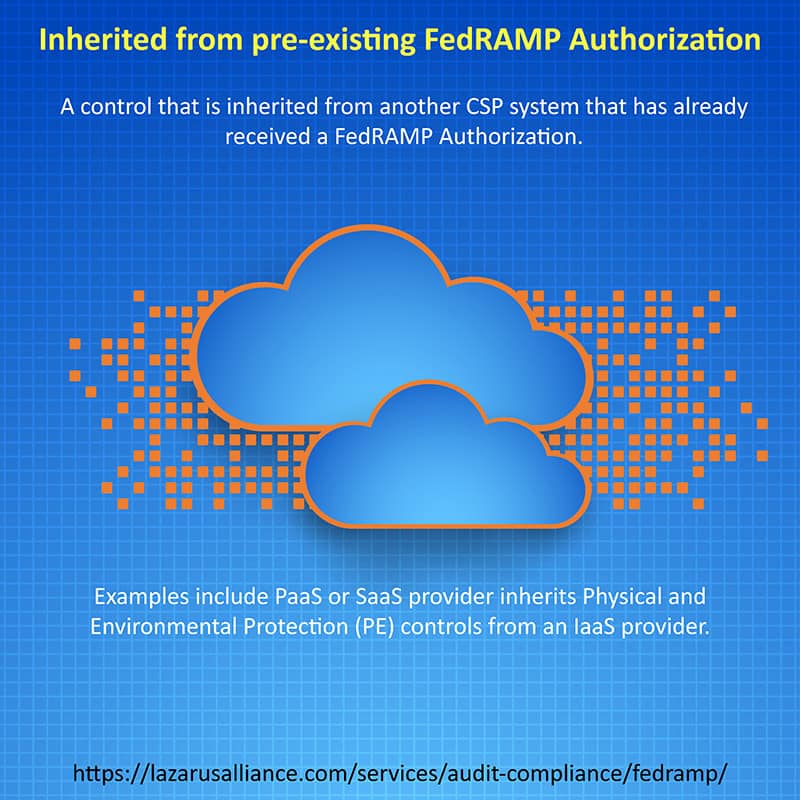
For SaaS and PaaS systems that are inheriting controls from an IaaS (or anything lower in the stack), the “inherited” option in the SSP must be selected, and the implementation description must simply say “inherited.” Authorized reviewers will determine whether the control-set is appropriate or not.

The NIST term "organization defined" must be interpreted as being the CSP's responsibility, unless otherwise indicated. In some cases the JAB has chosen to define or provide, in others they have left the decision up to the CSP.

The official Control Origination classifications are:

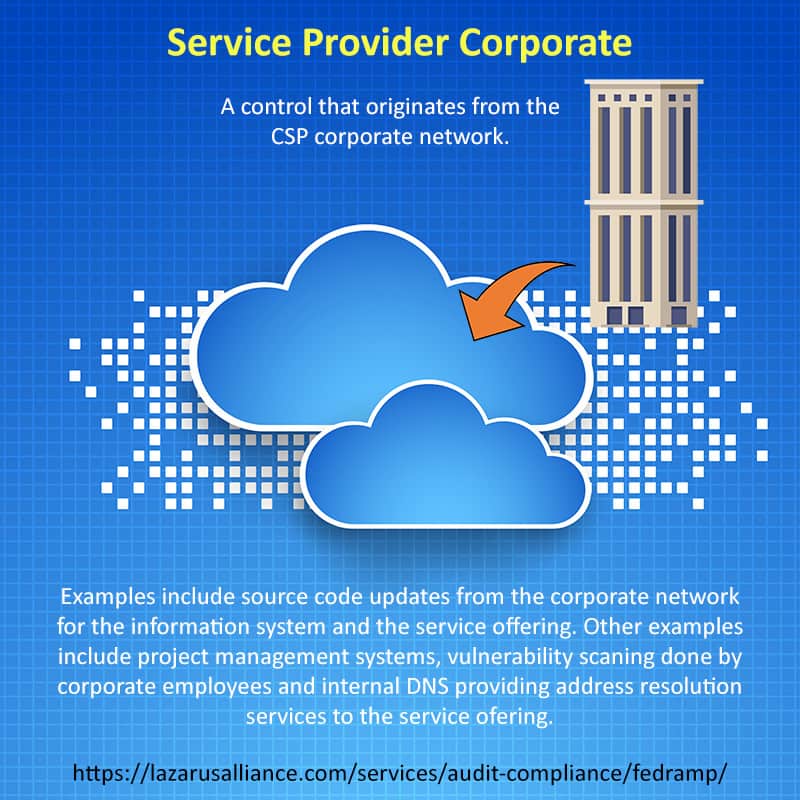
  • Service Provider Corporate
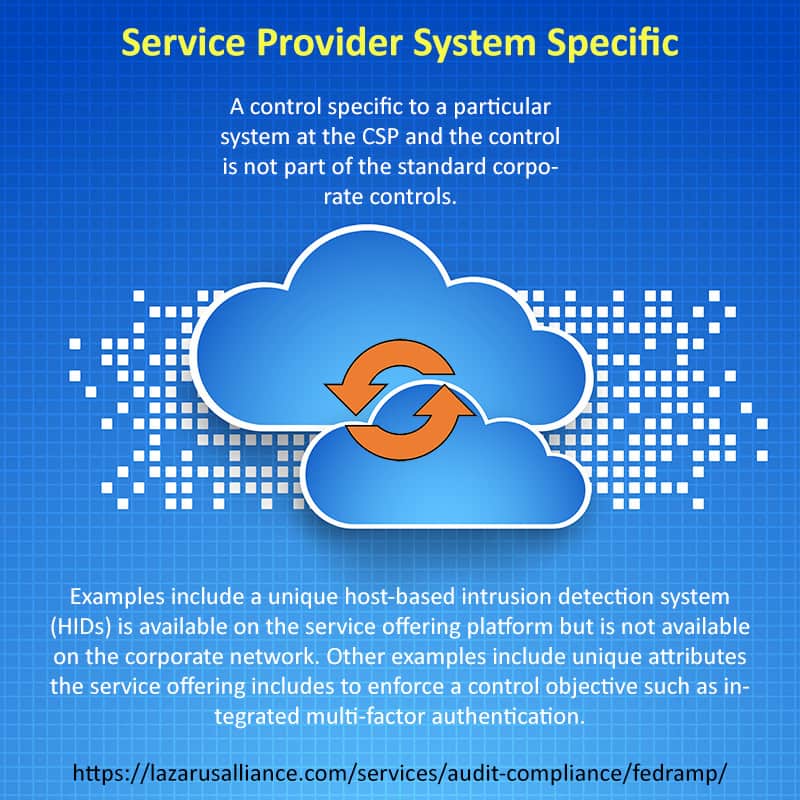
  • Service Provider System Specific
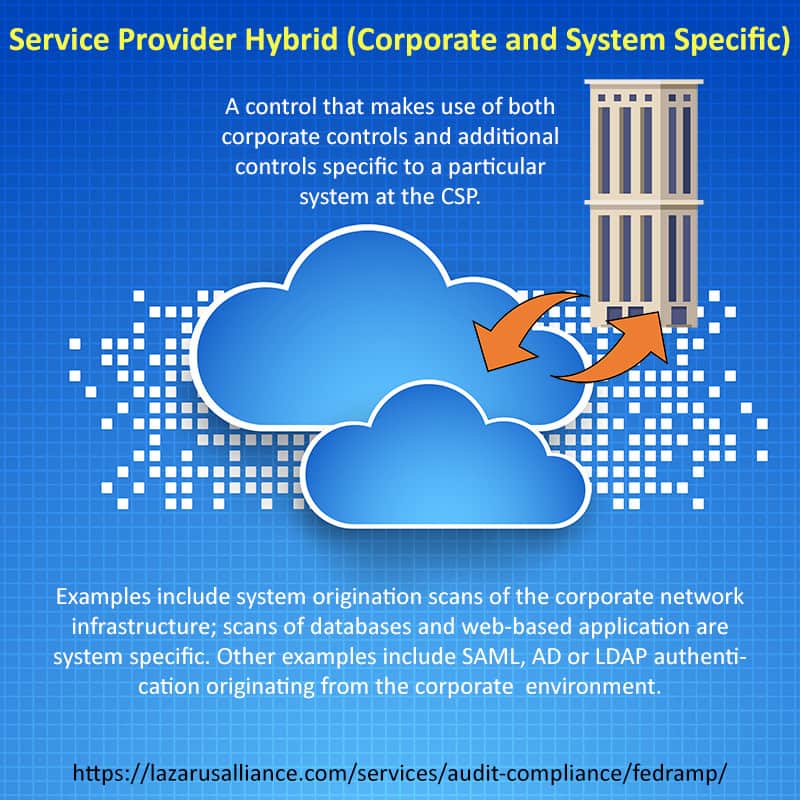
  • Service Provider Hybrid (Corporate and System Specific)
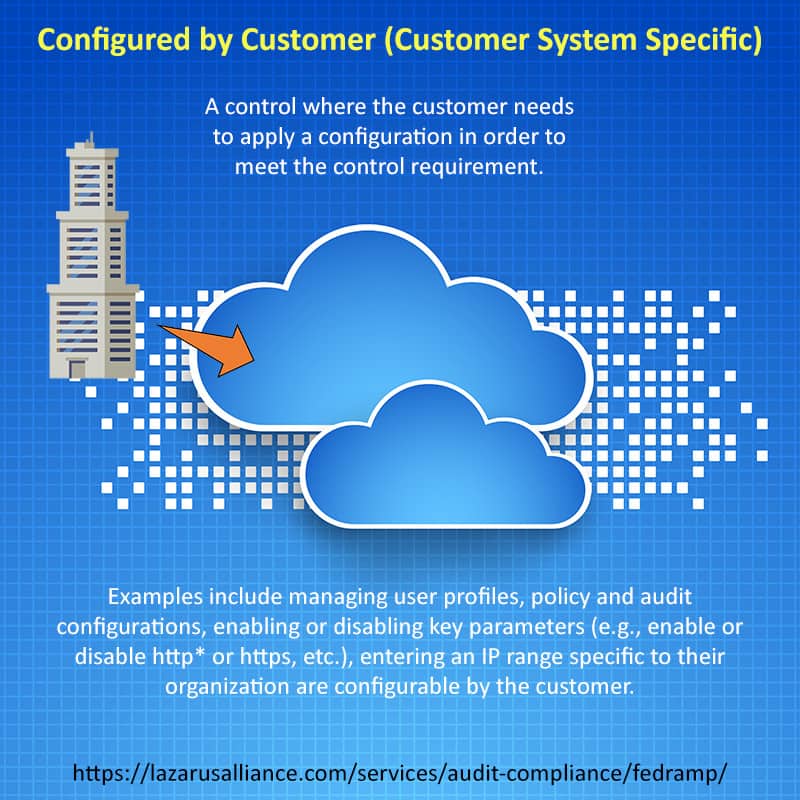
  • Configured by Customer (Customer System Specific)
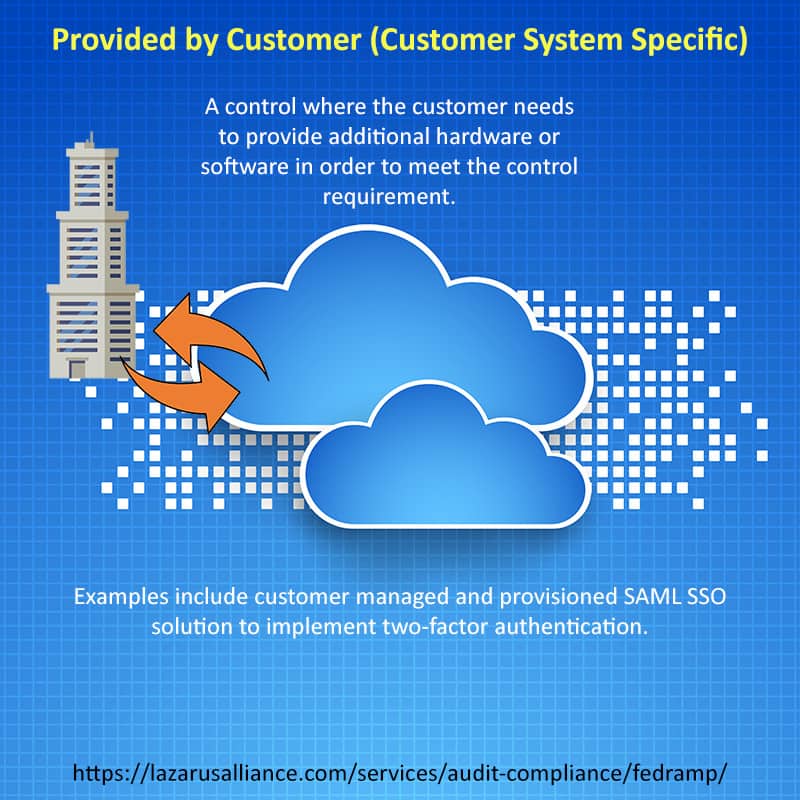
  • Provided by Customer (Customer System Specific)
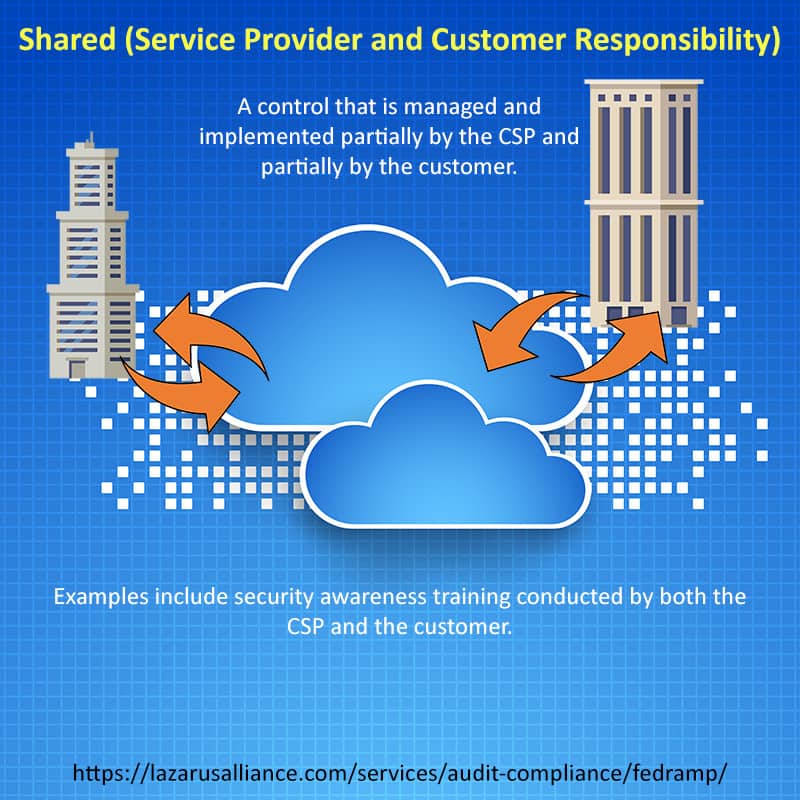
  • Shared (Service Provider and Customer Responsibility)
  • Inherited from pre-existing FedRAMP Authorization
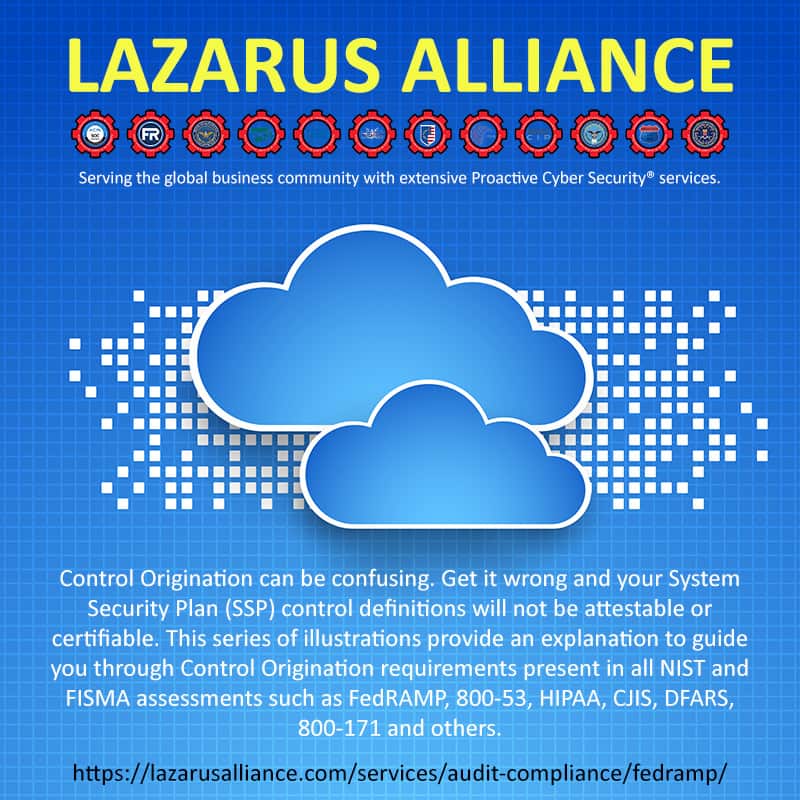
Control Origination can be confusing. Get it wrong and your System Security Plan (SSP) control definitions will not be attestable or certifiable.
FedRAMP Control Origination Service Provider Corporate
FedRAMP Control Origination Service Provider System Specific
FedRAMP Control Origination Service Provider Hybrid Corporate and System Specific
FedRAMP Control Origination Configured by Customer Customer System Specific
FedRAMP Control Origination Provided by Customer Customer System Specific
FedRAMP Control Origination Shared Service Provider and Customer Responsibility
FedRAMP Control Origination Inherited from pre-existing FedRAMP Authorization
Glowing Neon malware sign on a digital projection background.

What Is Autonomous Malware?

We’re reaching the end of 2025, and looking ahead to 2026, most experts are discussing the latest threats that will shape the year ahead. This year, we’re seeing a new, but not unexpected, shift to autonomous threats driven by state-sponsored actors and AI.  With that in mind, a new generation of threats, broadly known as...Continue reading

Stay ahead of federal and industry security alerts with Lazarus Alliance. Featured

What CISA’s Emergency Directive 26-01 Means for Everyone

In mid-October 2025, the CISA issued one of its most urgent orders yet: Emergency Directive 26-01. The directive calls on all Federal Civilian Executive Branch (FCEB) agencies to immediately mitigate vulnerabilities in devices from F5 Networks following a state-sponsored breach of F5’s systems and access to portions of BIG-IP source code and vulnerability data. The event...Continue reading

Make sure that your software is secure with or without AI. Trust Lazarus Alliance. featured

Cybersecurity and Vetting AI-Powered Tools

A recent exploit involving a new AI-focused browser shone a light on a critical problem–namely, that browser security is a constant issue, and AI is just making that threat more pronounced. Attackers discovered a way to use that browser’s memory features to implant hidden instructions inside an AI assistant. Once stored, those instructions triggered unwanted...Continue reading

mnage security against insider threats with Lazarus Alliance. featured

Shutdown Security And Cyber Vulnerability

When the federal government shuts down, the public sees closed monuments, unpaid workers, and halted programs. What they do not see is the silent surge of cyberattacks targeting agencies already operating on fumes. During the most recent shutdown, attacks against U.S. government systems spiked by nearly 85%.  Cybersecurity failures during government disruptions rarely start with...Continue reading

Manage identity security and compliance with a trusted partner in Lazarus Alliance. featured

Identity and the Shift from Malware

The world of cyber threats is rapidly evolving, and while we can see these changes more generally, it’s always crucial to understand them concretely. As the 2025 CrowdStrike Global Threat Report shows us, the landscape of our industry is changing.  We’re digging into this report to discuss a challenging trend: the move of hackers foregoing...Continue reading

Harden security against new AI attack surfaces. Work with Lazarus Alliance. featured

Maintaining Compliance Against Prompt Injection Attacks

The increasing adoption of AI by businesses introduces security risks that current cybersecurity frameworks are not prepared to address. A particularly complex emerging threat is prompt injection attacks. These attacks manipulate the integrity of large language models and other AI systems, potentially compromising security protocols and legal compliance. Organizations adopting AI must have a plan...Continue reading

Stay ahead of CMMC changes with Lazarus Alliance. Featured

Are We Already Talking About CMMC 3.0?

The ink has barely dried on the CMMC final rule, and already the defense contracting community is buzzing with speculation about what comes next. Just when contractors thought they had a moment to catch their breath after years of regulatory limbo, whispers of CMMC 3.0 have begun circulating through the industry. But is this just...Continue reading

Lazarus Alliance helps enterprises manage identity security and data governance.

Centralizing Identity-Based Risk

As the traditional network boundary dissolves and remote work becomes standard practice, identities are the major frontier for security. Whether we’re talking about human users, service accounts, or machine identities, these have emerged as both the primary access mechanism and the most targeted attack vector.  It has become imperative for providers to centralize identity management...Continue reading

FedRAMP Authorization assessments from Lazarus Alliance. featured

Deviation and Significant Change Requests in FedRAMP: A Comprehensive Guide

FedRAMP provides a standardized approach to security assessment, authorization, and continuous monitoring for cloud products and services used by federal agencies. While the program’s rigorous baseline requirements ensure consistent security, the reality is that this consistency calls for a little flexibility.  This is where deviation requests and significant change requests come into play. These two...Continue reading

Get expert monitoring and security support with Lazarus Alliance featured

The Costs of Compliance and Data Breaches

Data is possibly one of the most valuable assets any organization holds. Customer information, employee records, and proprietary business intelligence present challenges because the data flowing through modern enterprises represents both significant opportunities and serious risks.  Businesses face a challenging balance: investing in compliance measures to protect sensitive information while also preparing for the real...Continue reading

No image Blank

Lazarus Alliance

Website: