FedRAMP 20x is not merely a faster authorization path; it is a different evidence economy. The organizations that benefit most will not be the ones with the thickest System Security Plan. They will be the cloud service providers that can continuously prove control performance through structured, reusable, machine-readable evidence aligned to NIST 800-53, OSCAL, and real operational telemetry.
For federal cloud buyers, the shift is equally important. FedRAMP reported 92 new FedRAMP Certifications in FY2026, including 66 Rev5 and 26 FedRAMP 20x Certifications, and stated that the marketplace reached 538 FedRAMP Certified cloud service offerings; FedRAMP also said it will stop processing Legacy FedRAMP Rev5 Certification applications on June 11, 2027, according to FedRAMP, “Scaling a Better Path to Cloud Security”. That means the practical question for CISOs, compliance leaders, and cloud engineering teams is no longer “How do we assemble a package?” It is “How do we operate an assurance pipeline?”
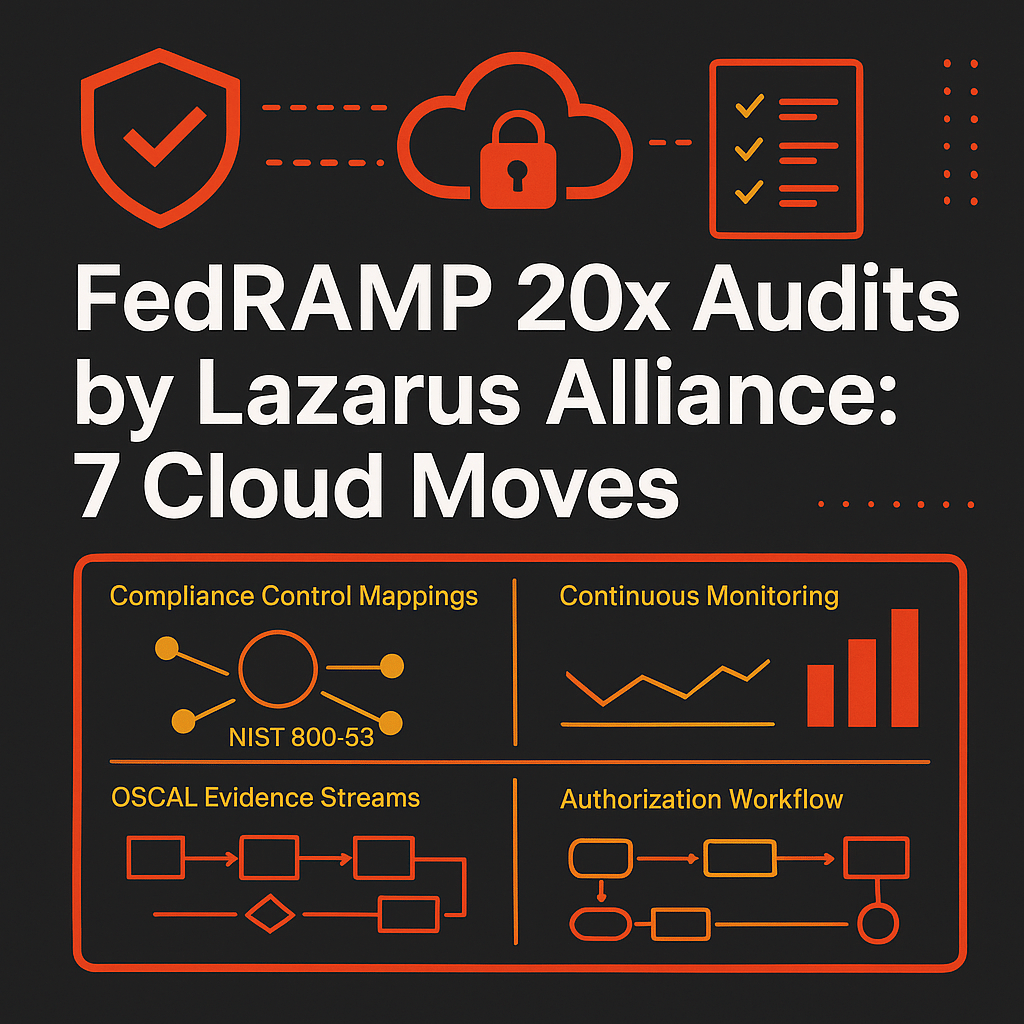
Lazarus Alliance approaches FedRAMP 20x audits as a continuous cloud assurance program: control architecture, evidence automation, technical validation, governance, and assessor-ready traceability. The following seven cloud moves translate FedRAMP 20x into an actionable operating model for providers pursuing federal authorization, agencies evaluating cloud risk, and enterprises seeking NIST 800-53-grade assurance.